52 Ancestors In 52 Weeks, Week 7: Valentine

Background Music: “Unforgettable” as recorded by Nat King Cole in October 1951   https://www.youtube.com/watch?v=aXjdMV7SOfE

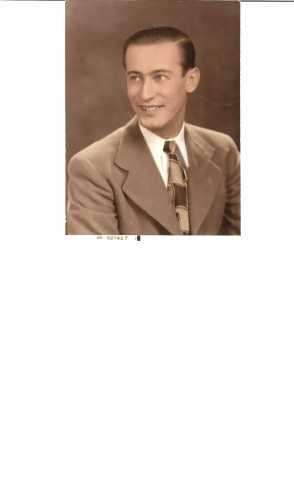
He was the first man with whom I fell in love. He loved me at first sight and knew I would always be his. He nicknamed me “Punkie” and enjoyed making me laugh and smile. He was also totally in love with my mother so all three of us formed a family until my two brothers would complete that circle. He was my first Valentine…my dad, Edward Joseph Slabik (1924-2007).

My father would pass many interests, talents, and gifts along to me. He filled our home with music, and the stereo would boost the stylings of Frank Sinatra, Joni James, and our favorite Nat King Cole. He would sing along in a rich voice that added to the magic of enjoying the songs. I learned to sing along, too. I became a lifelong music lover. Also, he introduced me to the joys of reading…reading everything from detective novels to road maps to almanacs. Getting my first library card was pure joy to me…I became a lifelong reader. Because my dad read five or more newspapers a day, he would often write letters to the editor to give his slant, opinion, or support to the issues. I learned that writing can be a powerful outlet. I became a lifelong writer.

I miss my father greatly. There is so much more to tell about our father-daughter relationship. Those memories I chose to treasure alone in the recesses of my heart and spirit. One time, my mother told me that I was my daddy’s little girl who grew to be his daughter…a supreme compliment to me and my precious dad.9906463d-2f01-4502-bd96-cce212540337

Exit music/lyrics: “That’s why, darling, it’s incredible that someone so unforgettable thinks that I am unforgettable, too.”


52 Ancestors In 52 Weeks, Week 5: In The Census

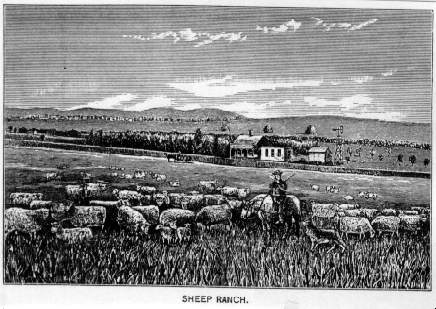
sheep ranch

My 2nd great grandfather, Andrew Storer, must have had wanderlust in his soul. Born in Maine in 1817, he would settle in seven different territories and “infant” states before he died in 1895. He would work in a brickyard, operate a sawmill, work on the Erie Canal and Mississippi River, and own a farm. His name can be found on cash sales of land in newly settled territories and on Homestead Act documents. He was active in local government councils wherever he settled.

The 1880 Federal Census contains a Schedule 3, an agricultural record. By that year, Andrew would be settled in his last home in Osborne County, Kansas. He had moved there in 1871 so this schedule measures nine years of his success in settling on the plains. I had wondered what his farm was like…this schedule would complete the picture for me. That year, he reported that his farm and buildings were worth $5,000 while his livestock were valued at over $4,600. His sheep herd was comprised of 1,100 sheep that had yielded over 4 tons of fleece that year. He had 400 lambs with five being killed by dogs. In addition, he had 16 swine…two of his pigs had traveled all the way from Iowa when the family came by wagon train. Also of importance on the farm were 40 acres of forest trees. At that time, trees were still scarce on the plains. The Kansas Department of Agriculture asked farmers to devote lands to the cultivation of trees. Andrew was known for caring for hearty cottonwood and walnut trees. In total, Andrew answered 100 questions about his farm. (A copy of the schedule form can be found at https://www.archives.gov/files/research/genealogy/charts-forms/1880-agricultural.pdf  .)

Many of our ancestors were farmers. The U.S. government recorded agricultural statistics from 1850-1900 on these non-population schedules. These records promise to cultivate and produce glimpses into the lives of those ancestors. What seeds will be planted into the quest for ancestral findings when one reads them?

Postscript: those two pigs were also famous for something else…they were the first pigs brought to Osborne County, Kansas. Never underestimate the value of a porker.

52ancestors-sidebar-1

52 Ancestors in 52 Weeks, Week 4

52ancestors-sidebar-1

This week’s challenge from Amy Johnson Crow is the theme of “Invite To Dinner”. As soon as I read this prompt, I knew who was coming to dinner: my maternal 2nd great grandparents. Amos Howell Boultinghouse and Maria Magdalina Kramer were born worlds apart…one a member of a patriotic Illinois plains family, and the other from the Alsace region of France. One was educated at home and taught how to hunt and survive; the other was educated in a convent school in the art of fine embroidery work. How they would meet and marry is written in the beginning chapters of their life stories.

Graciously inviting them to dinner, my aim is not the setting of the table and the presentation of a special dinner. Conversation loaded with thinking questions directed at each of them would be the menu. Welcoming them and embracing them for the first time would bring instant tears of joy. I have never found pictures of them, and I would be most anxious to glaze into their eyes and whisper “Grandpapa … Grandmere”.

Amos came from a family that had migrated from western Pennsylvania, settled for a time in Ohio, and made a home in White County, Illinois. His father passed away when Amos was five years old. “What impact did your father’s death at your early age have on you? How did your mother compensate for this loss? How did your stepbrothers take you under their wings?”  Amos came from a patriotic family whose grandfather served in the American Revolution and his father in the War of 1812. I would ask, “What steered you toward enlisting in the the Army in 1837 (age 19) and again with the Illinois Infantry during the Civil War (age 43)? What were your lessons of war? What did you regret?”  Finally, when he was 53 years old, he took advantage of the Homestead Act to move his family to Osborne County, Kansas. “Describe moving your family and going by wagon train to your new home. What challenges presented themselves to you and your family? What did you tell yourself so you could succeed in Kansas? What was the measure of that success? Surrounded by your children and grandchildren, share your memories of the later years of your life.”

Maria was born in a part of France near the German border. Her surname is of German derivation. Even her first and middle names are in the German naming pattern. At times, this land switched hands between the two countries. “Who are your parents as I have found nothing about them? Why did you immigrate to America? Do you speak French, German, or both? Tell about your convent school education.” Maria, who would go by Mary, married Amos when she was 15 years old, and he was 25. “How did you meet Amos? On your marriage license, you stated that you were 22 years old…you were only 15…what prompted you to falsify your age? What prepared you to move from the bustling streets of Manhattan to the plains of Illinois? What prior knowledge did you have about being a farmer’s wife? What skills?” As the years advanced, Mary moved with her family to Kansas. Some of her children were married adults who did not join them. She was with her 10th child. “Describe the trip by covered wagon. Did you fear giving birth along the journey? What did you tell yourself so that you would remain positive, strong, and resilient? Surrounded by your children and grandchildren, share the memories of the final chapters of your life.”

It would be a great blessing if this dream dinner would come to pass. As a spiritual person, I know that one day we will dine at the banquet table of the Lord…all these questions will be answered.
 

The Case Of The Baffling Babcia

Turning to my Aunt Emily as the family historian, I had asked her when her parents/my grandparents had immigrated to America. She responded that my grandmother had come in 1911 while my grandfather came in 1912. She further stated that my grandmother had gone from Ellis Island to Rye, New York, to become a domestic.

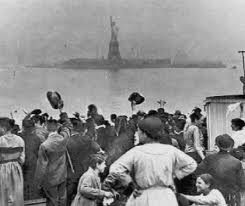
A few years later, my father passed away. I decided to create a heritage scrapbook about his life; I felt that it would be great grief therapy. Where to begin his story? Why, with his parents, of course! I headed for the Ellis Island records to look for Anna Mroz in 1912. When coming across her records, I read and studied the ship’s manifest very carefully. Yes, Anna was from Galicia. Yes, Anna was born about 1892. Yes, she was meeting her brother-in-law to go to Connecticut. (So far, the facts checked off with what I knew.) The document showed that she had purchased the ticket herself and had $9 in her pocket. She traveled with other young women from her village aboard the S.S. George Washington from Bremen, Germany. On the double spread scrapbook pages dedicated to Anna, I created a beautiful display of pictures of Ellis Island and her story. I patted myself on the back for my great detective work and storytelling abilities.

As I advanced in my researching skills, I found Anna in the 1920 Census…remember my story about that search? One of the questions was, “Year of immigration to the United States.” Right there in Anna’s row of answers was the year 1906. What?! Who reported that? Is that right? My Aunt Emily said… After regaining my thinking processes, once again I headed to the Ellis Island records. There she was…Anna Mroz on the 1906 records. She claimed to be 16 years old when she was actually 14. She had come with other girls from her village. She would be meeting her brother Jan. She had boarded the S.S. Georgia in Trieste, Italy. She had little money, but had at least the $25 that was required to make the journey. Her parents were deceased as recorded on the manifest. Was this really my babcia (Polish for grandmother)? How did this little teenager get from a tiny village in Poland to the seaport of Trieste? How did that feel to walk away from her family to the big unknown of America? Our immigrant ancestors must have been made of strong mettle.

As time went by, I was able to obtain a copy of my babcia’s naturalization papers. Applicants were asked to supply the name of the ship, departure point, and date of arrival in New York. Her answers complemented the information that I had found. Success…Anna did immigrate in 1906. The Case of the Baffling Babcia had been solved!

Oh, those beautiful scrapbook pages…they are waiting to be corrected.

Genealogical lessons learned: family stories need to be verified with documents…be prepared for some errors and surprises.

ellisi


The Journey Begins…

Finding my roots is a continuing work in progress that requires patience and planning, research and revision, study and steadfastness. In continuing my quest to find my families’ stories, I have come to a fork in the road of that journey. Should I take the turn in the road that leads to creating a journal? Journaling would give me the freedom to tell stories in no particular order…the freedom to share…the freedom to question.

Thank you for joining me. Questions and comments are welcome at any time. May I encourage you to begin your own blog to share your family stories.