52 Ancestors In 52 Weeks: Immigration

His name appeared like a shooting star across the sky. Then, he fizzled out of sight on the horizon. I had found my grandfather’s older brother as he disappeared into the mist in front of a brick wall.

A cousin alerted me that our grandfather’s brother, Josef Slabik, appeared in a marriage license application in the records of Manchester, Hillsborough County, New Hampshire. He also could be found in a birth record for his daughter. So, the search was on.

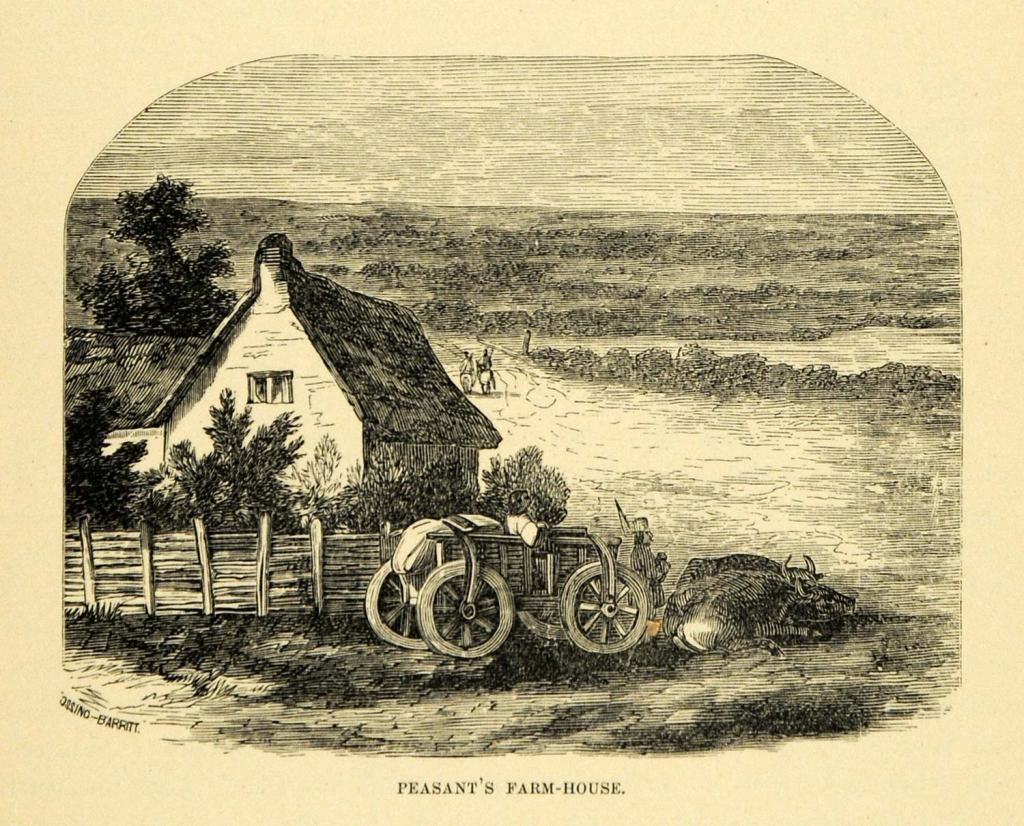
As a 21 year old, Josef married a fellow Polish immigrant Karolyna Makar on 21 October 1902. He was a weaver at the Amoskeag Textile Mill in that New Hampshire town. In researching the mill, it was one of the largest in the world at the turn of the century. Advertisements were placed in European newspapers to call workers to America. Were these ads Josef’s calling card to a new life from being a serf in his home country?

In October, 1905, Josef and Karolyna welcomed their first child, daughter Maryanna. Her birth certificate was located.

Then, the brick wall stands between me and the rest of the details of their lives. No appearances in passenger lists, censuses, city directories, town records. Vanished…unknown…no paper trail to their lives. I could just shake those branches of my family tree in frustration. The paternal side of my tree is this side of barren.

What was found did tell me of my grandfather’s older brother who came before him to America. My immigrant grandfather never spoke of his family. So, these facts became little diamonds in the rough. Perhaps, another day more can be found about Joseph, Karolyna, and Maryanna.

a
52 Ancestors In 52 Weeks: Earning A Living

October, 1732             Ipswich, Essex County, British Colony of Massachusetts

As my life draws to an end, I think of all I was to all of my people. I have been asked to relate how I made my living as a family man, as a citizen of the British Colony, as a citizen of the Kingdom of God. And so, I will share my story.

As a family man, I was faithful husband to Elizabeth and our eight children. One might give my job description as a yeoman. I was a freeholder of my farm land. The hard work of my family took care of the land and fed us. Life was hard…life was unpredictable…life was heavy. We kept our eye on the Lord to steady us.

As a citizen of the British Colony of Massachusetts, I took up arms in King Philip’s War. King Philip was the name we gave to the Native American Wampanoag chief Metacom. This took place in 1675. The chief and his people would not recognize our British authority and would not recognize our intent to claim more lands as our own. So, the fighting began. I was a witness to its violence.

As a citizen of the Kingdom of God, I was a deacon in my church in Chebacco Parish. The parish formed as the community of the Second Church of Ipswich. My duties included caring for widows and orphans, overseeing financial matters, and cooperating with other deacons and the pastor. This church formed the lives of myself and my family.

And so, as I leave this Earthly life, I ask the Almighty to judge me as He may.

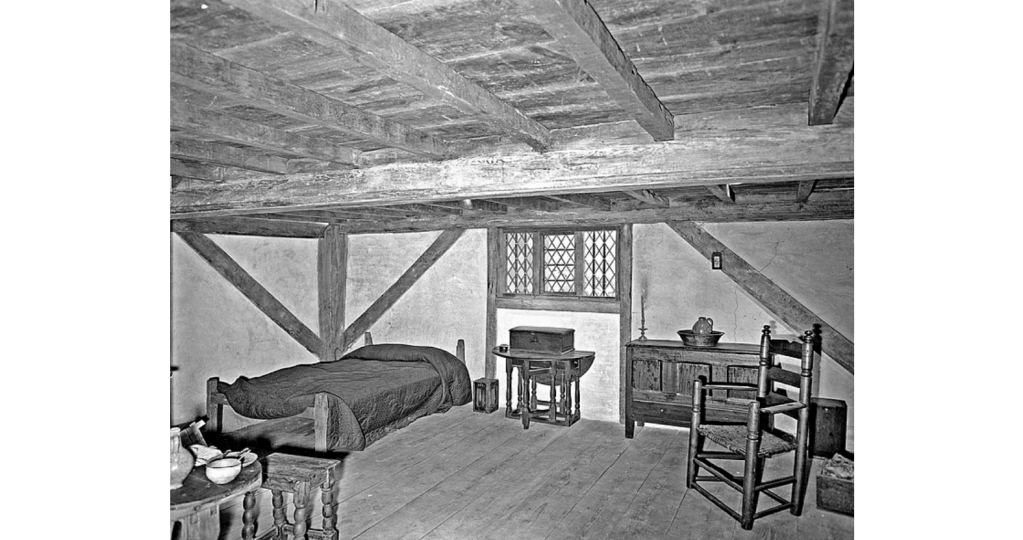
Note: Seth Story and Elizabeth are my 7th great grandparents. A section of their home in Ipswich is on display in the Smithsonian in the American History Museum.

52 Ancestors In 52 Weeks: Influencer

As an elementary teacher, I dedicated much of my career to the creating lifelong readers and writers. I had a unique way of viewing the integration of these two literacy areas. Reading and writing existed together as one body, not separated parts of the whole. And so my journey began…

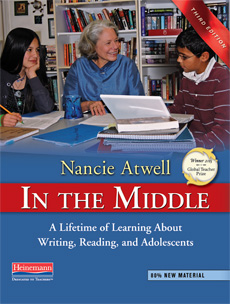
In 1995, I came across a nationally known language arts teacher named Nancie Atwell. Her book In The Middle was speaking directly to me. She got me as I did her. She understood the new direction I was taking in my Language Arts teaching. We spoke the same language! What a relief to know that I was not standing alone. I became even more passionate about teaching.

In meeting up with Nancie, she opened the door to other influencers…Lucy Calkins, Regie Routman, Katie Ray Wood. Through their influences, my teaching was making me more empowered. Then, there were childhood literature writers who were igniting my world and lighting fires in my students’ lives: Kate DiCamillo, Beverly Cleary, Avi, Cynthia Rylant.

So, one little fire that was set by an influencer, Nancie Atwell, ignited into a passion for literature and writing. Thank you, Nancie, for starting that fire.

52 Ancestors In 52 Weeks: Witness To History

Amos Howell Boultinghouse         25 April 1865

I much admired the man. He stood as a lover of this country and its ideals. I had known of him early in his political career as we both lived in Illinois. I was born and raised here, but I had spent five years away when I served in the U.S. Army from 1838-1843. I understand that he hailed from Kentucky, but his heart had grown fond of the people of Springfield, the capital city. So I felt a kinship for him.

At the age of 43, I got a calling…a call to return to the military. My fellow Illinoisan was now the President of the United States. First, he asked for 75,000 troops on 15 April 1861. Second, I joined up with men from Dupage County to serve in the 55th Illinois Infantry to meet his call. We needed to preserve the Union. I would be serving as a wagoner since I had had much experience in the care of horses.

Many an evening, the men in my company would sit around the campfire. Maybe just telling stories about family and home. Maybe just creating stories about adventures. Maybe just wondering how old Uncle Abe was going to pick the next Commanding General. Maybe just how we were going to win this war.

I had enlisted for three years, and my time was up in April 1864. I was now 46 years old…quite an old guy who needed to head back home to his family and his farm. The war could not last much longer.

The news did not take long to travel…it was unbelievable, unfathomable, unreal. The President had been shot and died on 15 April 1865. It was just 4 years since his call for troops. What would happen now to the nation?

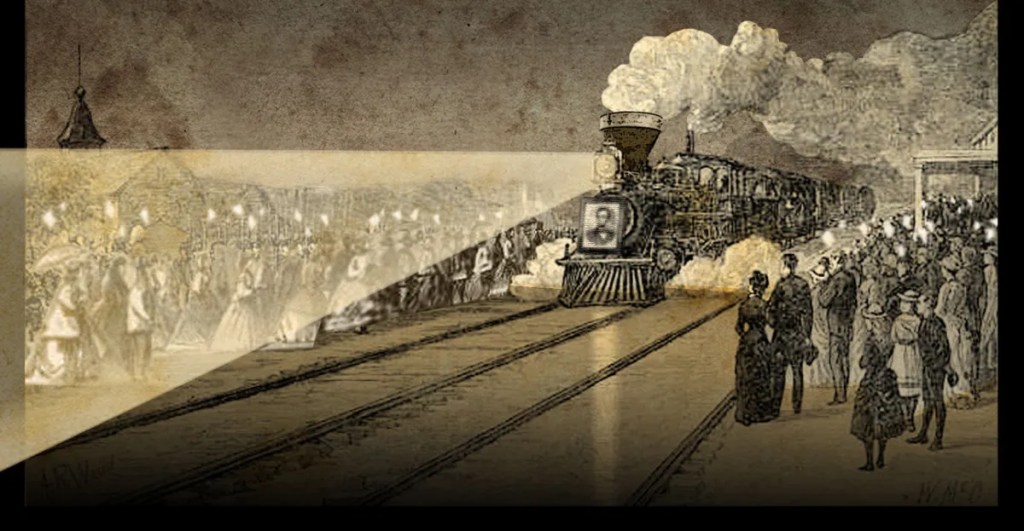
News is also coming that a funeral train will wind through major railroad cities. Thousands will salute Mr. Lincoln on his way back home to his beloved Springfield. My heart will follow that train as I salute my Commander-in-Chief on his way home. May God save us and the Union.

~Amos H. Boultinghouse  55th Illinois Infantry, Company E

52 Ancestors In 52 Weeks: Origins

What were the origins of her thoughts? What was the catalyst for this line of thinking? How did it all start?

1906…a Polish orphan girl has no possibilities…she is 14 years old. Where can she go? What will become of her? She and a small group of her friends get an idea. Each of them has brothers who have gone to America. Is it at all possible to go where their brothers live? Anna Mroz thinks she has found a solution.

The group of girls makes a plan. They will travel from their home in Jastrzebiec. With guidance from their brothers who instruct them through letters, they will get tickets for passage from Trieste, Italy, to New York, New York. This first part of their journey from Poland to Italy is more than 800 miles. How much of that journey will be on foot and how much by train? What will it cost each of them?

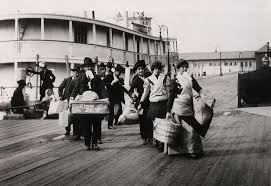
Safely arriving in Trieste, the group of five girls is ready to take passage on 30 April on the ship Georgia, which will accommodate 350 passengers in steerage. When passage was booked, Anna lied about her age. She says she is 16. They arrive in New York City on 24 May 1906. For more than three weeks, she and her girlhood friends have battled seasickness, uncertainty, anxiety. Perhaps, one of their first sights as they see the skyline of the city is the figure of Lady Liberty. Does her presence ease some of their fears? Then, there are the various stations to pass through at Ellis Island. Eventually, her brother Antoni will meet her before they leave for Connecticut. What will come next?

Origins of thought, origins of family and country, origins of a new life…so how did this start an adolescent thinking, planning, hoping? My grandmother…Anna Mroz.

52 Ancestors In 52 Weeks: Favorite Photo

Asking me to pick a favorite photo, brings out this question to me: in what category? For what topic? On my genealogical journey, this picture to me is one of the best. It is the results of patience, steadfastness, and perseverance.

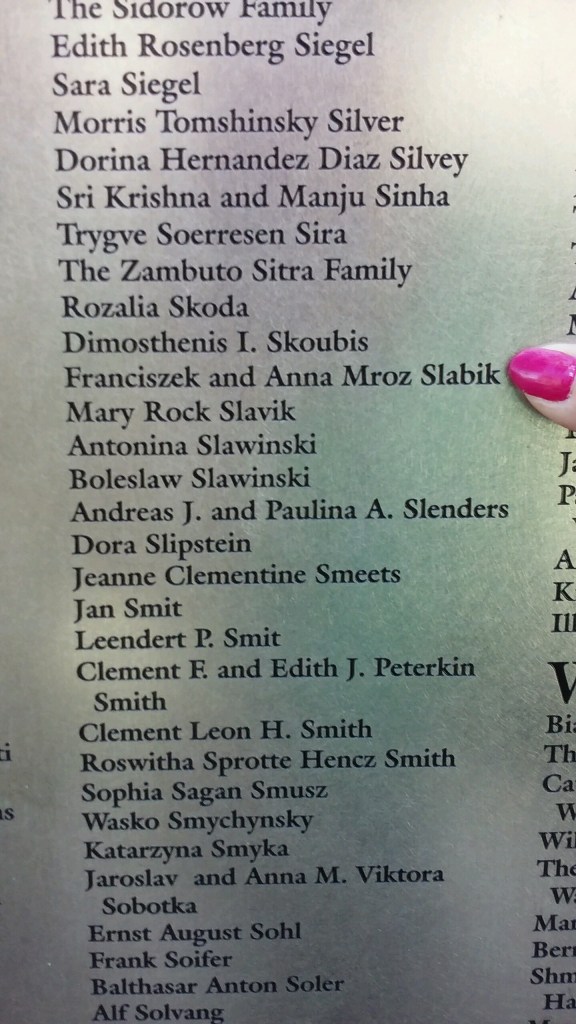
It started in 2007 when I was searching for my paternal grandfather’s name in the Ellis Island Records. He was not there. I had been told by my aunt, his daughter, that he came in 1912. Searching through pages and pages of documents, I kept looking for the elusive Franciszek Slabik. After a three year search, one Sunday morning, I said, “Frank, I am going to find you today. This is your day.” He was from Poland, but it was a time that Poland was not recognized as a country. I looked with an open mind. Bingo…there he was.

In Polish, the letter L can has a slash through it. In transcribing the records, the transcriber had written STABIK. He listed his country as Austria with Polish as his language. The town I know that he was from was listed. Bingo…

In 2017, I chose to have his name along with my grandmother’s name (immigrated to America in 1906) inscribed on the Wall of Honor at Ellis Island. Their names appear on Panel 761. Along with my husband Dan, we made a pilgrimage there…to breathe the air they breathed, to see what they saw when they arrived.

Why it this a favorite? It is a tribute to my grandparents. It is in honor of the granddaughter who never gave up looking for them. It is a beginning of an American story.

52 Ancestors In 52 Weeks: Family Lore

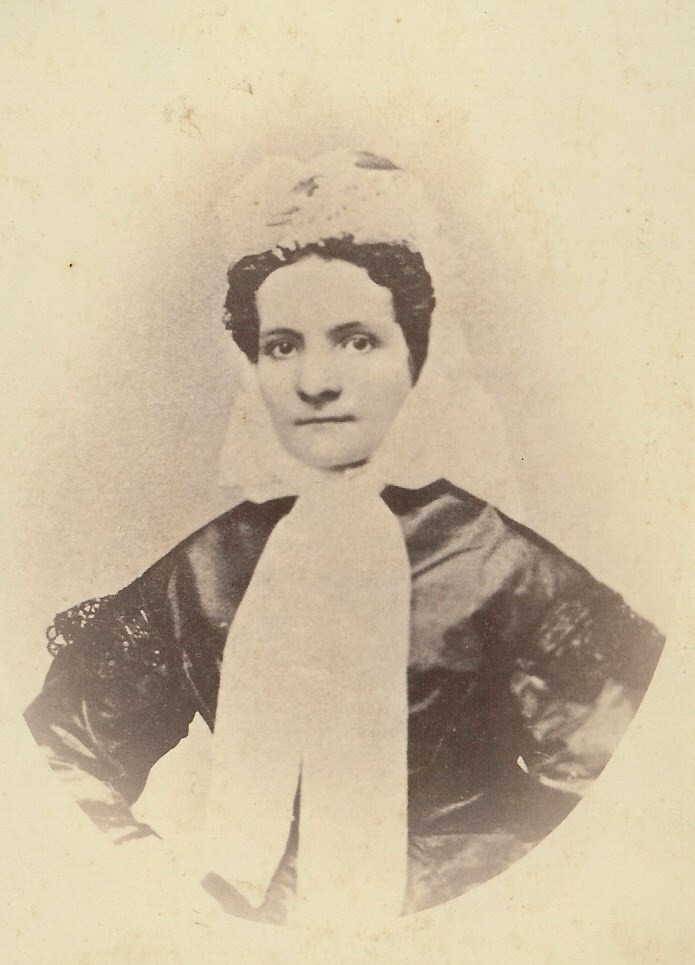
Just who was she? Why was she hiding in the background? Had she not had a life before meeting up with him? The family did not have much to tell about her as they did her husband. Oh, he was the source of tales, sagas, and downright family lore. So, just who was she?

Born in 1833, Mary Etta Soule grew up in a small hamlet in New York. Surrounded by water and forests, she lived among family, aunts, uncles, and cousins. For her first fourteen years, this was her way of life. Then the early death of her father left the family wondering how they would survive.

Her mother Jane was a strong willed woman who had little fear of anything. She gathered her young sons and daughter to make a new life. Part of their journey westward took them down the Erie Canal. Mary Etta and her family group went by steamer across Lakes Erie, Huron, and Michigan to Milwaukee. From there, they traveled by grain wagon to Watertown, Wisconsin. She was now eighteen and for awhile worked in a brickyard. She struck up a friendship with the manager, Andrew Storer. He needed a wife to care for the animals on his small farm so he proposed. Did they marry for love?

With her new husband Andrew, she discovered that she had married a man with wanderlust. He was originally from Maine with quite a background, too, in settling in different places. In time, they would settle in the Minnesota Territory, Iowa, and finally Kansas. Together they would raise nine children. Mary Etta became known for her steadfastness, loyalty, and familial devotion. She passed after a brief illness in 1887 at the age of 54.

Later, it was noted in the newspaper that Andrew had erected a memorial to Mary on his farm. Being one of Osborne County, Kansas’s earliest pioneer families, more is told and remembered about Andrew. Mary Etta remains a quiet figure without any family lore…sometimes, those persons are the foundation and backbone of those who are best remembered.

52 Ancestors In 52 Weeks: Friends

As one climbs the family tree, there are no branches or leaves for one’s lifelong friends. There are no recordings of their names. Friendships that blossomed through years of laughter and tears are not given that place of honor. How strange and unbelievable!

Who are our lifetime friends? They are buddies, pals with whom we spent our early childhoods , went to school together, shared rites of passage. In their company, one does not have to explain how they grew up, who one’s family is, when the milestones of life took place. They were witnesses to all that was.

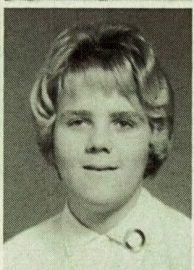
In honor and memory of my lifelong friend, I would like to introduce Cathy Irene Covert. We met in 1960. She lived in our neighborhood just a few short blocks over. I could walk to her house in five minutes. I met her through her cousin. My first impression was that she was bossy. As the three of us listened to records, little did I imagine that our friendship would last forever.

We became inseparable. We were the younger versions of Thelma and Louise sans the Thunderbird. We were the original Laverne and Shirley. We dated two best friends. When one of us was present, the other was not far away. Laughter and teenage angst followed us. After high school, she married and I went on to college. I moved an hour away. We wrote back and forth.

Through the years, we visited back and forth. When my husband and I visited with her, she would invite her children and their children to share dinners together. We were family.

On the morning of November 22, 2016, I was at my computer reading emails. The lights flickered, but the electric never went off. Later that day, I received the call from her son that she had passed away unexpectedly that morning. She made those lights flicker…her drama queen spirit was telling me that she was leaving.

I miss my lifelong friend. How do you plot on a family tree the important dates and times of all your adventures, misadventures, memories? And so I honor you, my dearest friend, Cathy Irene Covert.

Cathy’s Junior Class Picture

52 Ancestors In 52 Weeks: Tradesman

Skilled tradesman take years to hone their crafts. Often they use heavy tools to produce goods and provide services. But those two tradesman were of a delicate nature. They worked with needles and thread while crafting their goods. They started in different places but came to the same town. Their stories are quite different, but they receive equal footing in my family tree.

Born in England in 1844, Isabella Anna Couchman immigrated to America ten years later after the death of her father. Settling in Manhattan, New York City, she was trained in the art of dressmaking. (Details of her work and employment are unknown to me.) At the age of 22, she married William Henry Stevens, a Civil War veteran and fellow English emigrant. With their family of nine children, they eventually settled in Kill Creek Township, Osborne County, Kansas, in 1871…a long way from the big cities they had known. Since the mother of the family was responsible for their clothing, her dressingmaking and sewing skills were an asset. Isabella became my 2nd great grandmother.

Born in 1828 in the Alsace-Lorraine region of France, Maria Magdalina Kraemer immigrated to Manhattan, New York City, in the early 1840s. (The details of her parentage and immigration are unknown to me.) She was trained in a convent school in the delicate art of fancy needlework and embroidery. She worked in Manhattan. At the age of 15, she married Amos Howell Boultinghouse who was stationed in the U.S. Army at Fort Columbus. He was ten years older than she. Once discharged, they lived in DuPage County, Illinois. During the Civil War, Amos reenlisted. They, too, eventually settled in Bloomington, Osborne County, Kansas, in 1871. Her needle skills were an asset to her family in making clothes. Maria became my 2nd great grandmother.

Isabella and Maria would meet when Isabella’s daughter Naomi Ruth married Maria’s son Lafayette Edward on 1 January 1894. So once upon a lifetime, two women from different countries in Europe with the same trade skills would meet and intertwine their lives on the plains of Kansas…and eventually mine.

52 Ancestors In 52 Weeks: Reunion

Under the shady cottonwoods, carpenter Lafe Boultinghouse set out the tables he had assembled. It was his gift to the reunion that would take place in Bloomington, Osborne County, Kansas. His wife Mamie brought along eating utensils and plates that were used in her restaurant. Grandma B spread out the embroidered tablecloths that she had created by hand. Grandpa B toted the bread basket that contained loaves made from his wheat. Soon the families would assemble.

About noon, Grand and Grandma Storer arrived with their wagon loaded with chairs and food. Grandma had baked her family famous sugar cookies while Grand brought his family famous appetite. Grandma loved to entertain young people so she supplied games and prizes for them. Andrew Storer, their son, brought along his wife Isabella and two young daughters, Mae Mae and Mary Lee. Isabella had prepared hamper baskets filled with her fried chicken, potato salad, and several kinds of pie.

As the family sat down to eat, Grandpa B offered a prayer of thanks and blessings for all the assembled. Laughter and talking permeated their surroundings. Grandpa B told stories about his time in the Civil War…he was careful to tell just fascinating stories about fellow soldiers as he left out the real details of war. Grandma B told of her childhood in France and coming across the ocean while still a child. Lafe talked about his hunting and fishing exploits in Montana. The ladies all shared their plans for starting new quilts at the next Busy Bee Club meeting. Of course, the young people played games and entertained themselves. It was a heaven on earth day.

As evening approached, they gathered up their belongings and packed the wagons. Hugs and kisses floated across their spaces. They bid each other good-bye as they ventured home. It would be remembered as a heaven on earth day.

Note: this reunion is an imaginary one. The Boultinghouses and the Storers are my mother’s family. (She is the daughter Mae Mae.) In telling the story, I included talents that each one shared as their contribution to the reunion. Several of them were not alive at the same time. Perhaps in the Kingdom of Heaven, such a banquet has taken place among them.