52 Ancestors In 52 Weeks: First

First things first…first and foremost….first on the horizon…right now, these first thoughts are propelling my blog for this week. A new year welcomes new challenges and new goals as a first line approach to what comes next with my family tree research.

First things first: thank you, Amy Johnson Crow, for hosting 52 Ancestors. The weekly prompts spurred me on to start a blog about my family. Without your help, I most likely would not have written on a scheduled basis. Ideas and research would have fallen by the wayside. Thank you for the nudge, the mentoring, the prompting.

First and foremost: I discovered my writing voice. I discovered that I wanted to tell a story each week…not a story story, but the researched facts about my ancestors dressed up in personal vignettes. One thing I did not want to do was write scholarly articles spewing out all the references and sources for each ancestor. I would have faded fast on that route. Also, I discovered what I wanted to call myself as far as loving genealogy. I am a family history writer/author. I desire to craft out my writing…hopefully to bring my ancestors to life for one shining moment each week.

First on the horizon: I plan to let others in my family and friends circle know about my blog. I am not looking for praise and adulation…I am looking to inspire others to take pen in hand and create picture stories about their families. If one thread from an ancestor’s life can be shared, then the whole fabric of her being will be resurrected and remembered.

So a toast to the 52 Ancestors in 52 Weeks project: may our postings be works from the heart!
52 Ancestors In 52 Weeks: Resolution

So seriously, it is NOT my family tree that has that huge, I mean huge, research-defying brick wall. That dang wall has been staring me in the face for 7 years now…and it is not even my third great grandparents…they belong to my dear husband. So here is the scoop and the resolution.

Benjamin Haffner was born in Frederick County, Maryland, in 1791. His family emigrated from Germany in 1745. His father and grandfather were deacons in the Lutheran church. Benjamin was raised on a farm…all a typical family history for that time period. Along the way, Benjamin settles in Martinsburg, Berkeley County, Virginia, where he becomes a plough maker. He marries Rebecca Beason in 1825, and they become the parents of six children. In the 1850 Federal Census, he is listed as a “pauper” which was a special notation recorded in that particular census. In the 1860 Census, there he is again in Martinsburg. In 1861, the Civil War will come to call in that part of the Shenandoah Valley. General Thomas (Stonewall) Jackson will come knocking to commandeer the railroad. There will be unrest. Two years later, that western part of Virginia will join the Union and declare that they are the newly-born state of West Virginia. Benjamin and Rebecca disappear from all records…they cannot be found. They are not living with children. Their names cannot be found in any cemetery records. They are gone.

My resolution: I will find them by researching Lutheran Church records. Their two maiden daughters were buried in Martinsburg as their death notices declare. The girls’ parents are most likely buried in the same place. I will get copies of their death certificates, issued in 1912 and 1917. I will find them.

52 Ancestors In 52 Weeks: Nice

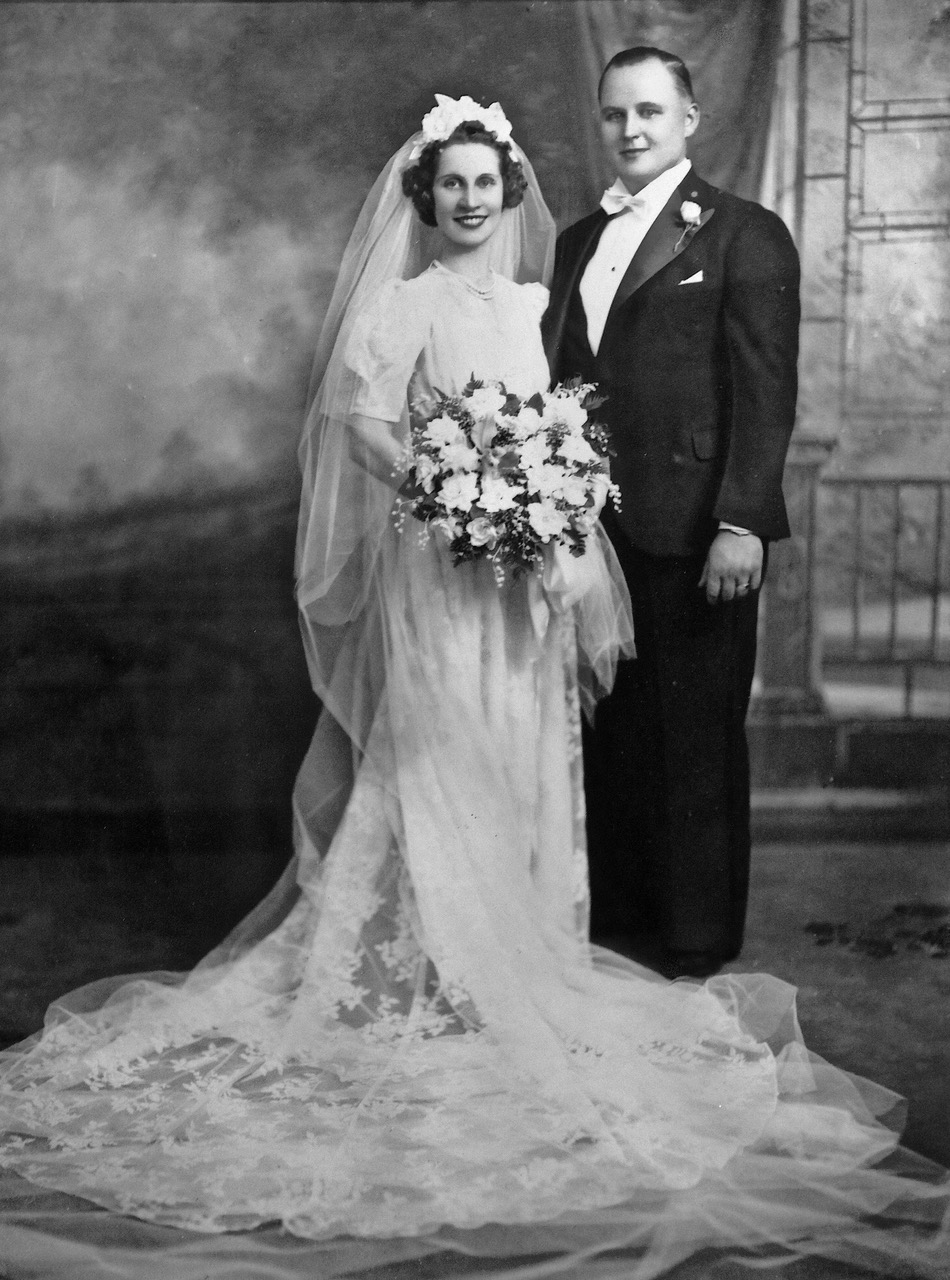
Emilia Slabik and Joseph Jaworowski
1939

Big sister Emilia and her smiles had no limits. Her two brothers were typically rambunctious and playful boys. She loved them and kept them tucked under her angelic wings of caring. Her brother Stanley was two years younger while brother Edjui (Polish for Edward) was nine years younger. When she and Stanley went to school each day, her little brother Edjui would tap on the window and wave good-bye to them. Emilia would blow him a kiss. All of them could not wait to be reunited on the return home when Edjui would be looking out that window for them. They were growing up in the ethnic neighborhood in the area of Nicetown in Philadelphia in the 1930s. Along with their Polish immigrant parents, the children were learning the value of caring for others and seeing to their needs. Emilia grew up to be tender-hearted and loving.

As the 1940s came, America was going to war. Her two brothers had enlisted in the Army and were headed for overseas…Stanley to Europe and Edjui to the Pacific. She was the letter writer in her family as her parents’ skills in writing were poor. She was now married to the love of her life, Joe; together they had two boys. Her mother’s health was poor so Emilia and Joe welcomed her parents into their home. Helping her husband run a family business kept her busy, too.

When her brothers returned from the war, Emilia and Joe welcomed them to their home so they could reacclimate themselves back into civilian life. Brother Edjui would entertain her boys with exaggerated war stories, suitable for the ears of four and six year old boys. Her tender heart reached out to her brothers who would soon depart to marry and begin careers. She nursed her mother Anna until she passed away. Emilia was always the perfect hostess in welcoming others to her family home.

In the 1950s, Emilia and Joe bought a new home in the Roxborough section of Philadelphia…a large beautiful home with big rooms and a grand garden. Emilia took up gardening and landscaping while she favored caring for her roses. It was not unusual for Emilia to have company, overnight guests, and family gatherings. Such a sweet, generous lady who was loaded with smiles, hugs, and kisses. As a child, I loved visiting with my aunt and uncle and my boy cousins. It also gave me the opportunity to visit with my Polish grandfather. What a treat to be with them all!

Aunt Emilia always remembered everyone’s birthday and sent them cards and letters. I treasured the notes she sent me. My beloved Aunt Emilia passed away in 2008, a year after her baby brother Edjui who became my father. I miss them all…I wish we could spend one more Christmas together.

52 Ancestors In 52 Weeks: Winter

Yes, m’am…yes, sir…our little group of Southern belles rocked the Forest Hills neighborhood of Winchester, Virginia, during the 1960s. We were like sisters, and we were attached at the hips. If you saw one of us, you would quickly see the rest of us. Peach, Smitty, Cleo, and I were a solid four. Sometimes, a few other girls would be tagging along; but we were the core group.

When the snow would fall and accumulate a few inches, we could be found dressed in layers and heading with our sleds to our famous Feagans Hill. Other kids in the neighborhood went there, too, and there was plenty of fun space for us all. The hill was right in the center of the street, but few if any cars drove down it during the day…the dads had driven the cars to work.

The fun would begin right after a breakfast of Cream of Wheat and hot tea. We had to get our insides warmed up. Putting together the warmest layers of clothing we could fit together: undershirts, flannels shirts, sweaters, pajama bottoms, pants, scarves, hats, and gloves. We were the forerunners of the Stay Puff Marshmellow man (from Ghostbusters) trudging up the hill. Sometimes, we were unrecognizable to each other. Our gang would be gathering.

The first flight of the day was the most exciting. We would line up and with our hands and arms gives ourselves a starting push. We were laughing, we were screaming, we were singing, we were propelling ourselves down the hill.

When we reached the bottom, we would all cheer and salute the hill. We were having the time of our young lives…not realizing the memories we were making. Off we went to take another ride. Around noon, we would head home for a short lunch break and to change into dry layers. Mom would be ready with warm bowls of soup and grilled cheese sandwiches.’

Our afternoon session would begin when Cleo would stop by for me. We would pick up Smitty and Peach. We would sled until dads started coming home from work. Being wet and cold played no part in our snowy playtime. We were the queens of Feagans Hill, and we rocked that neighborhood.

Postscript: This blog is dedicated to my best friend Cleo who died unexpectedly two years ago. I just know she is laughing it up by the side of the Lord reliving our girlhood escapades. Love you, girl!

52 Ancestors In 52 Weeks: Next To Last

Mina Storer’s next to last choices, her next to last decisions…was that how newly created widows thought? When some decisions had already been made for her, what would happen next? First, there were the grief and the shock of Wash’s sudden death. Second, there were widow’s weeds to place like a mantle over her shoulders. Third, there were family members to rally, consult, and console. How was the 74 year old farm wife expected to continue on her own?

Mina’s husband, Wash, had been ill for several years due to emphysema. It came from harvesting crops, and the small grain dust that invaded his lungs. Doctors could offer no relief, and suffering from the hardship of struggling for breaths had worsened Wash’s will to fight this condition. Evidently, he made a secret plan that would help himself and his wife. No one knew of the secret. The plan would unfold in time.

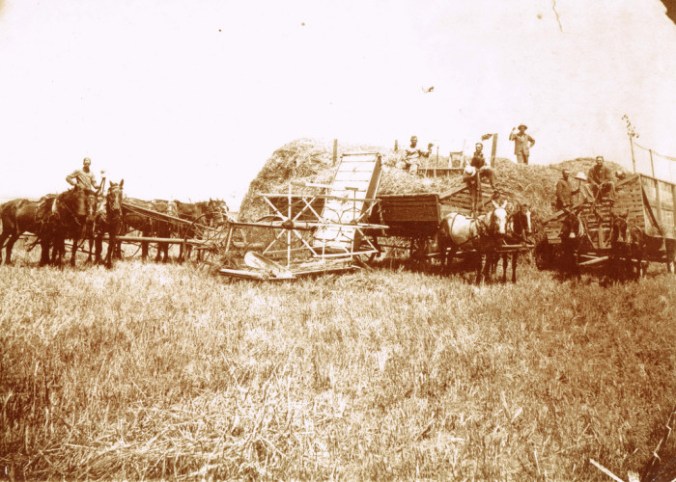
The spring of 1946 had brought visitors to the farm. Their son Leslie and his family were visiting from sunny California. Three of their eight children had moved off the farm when they reached adulthood. California was touted as the place to live with year-round warm weather and better jobs. Leslie had urged his parents to relocate, but his pleas had fallen on deaf ears. Osborne County, Kansas, was Wash and Mina’s home…they would not leave their farm.

During the last week of the visit, Wash put his plan into action. One morning when the rest of the family was out of the house, he left this Earth to find peace in the next life. He knew that without him by her side, Mina would chose to leave with son Leslie. Maybe with three of her children  with her in California, she could have warmth and sunshine in her final years.

And so, Mina made her next to last decision. She would go to California to live with three of her children. The remaining five would care for the farm and make it prosper. Sometimes, newly created widows find comfort and solace in those next to last decisions…maybe.

Postscript: Mina (Sarah Almina Nickel) and Wash (Washington Irving) Storer were my great grandparents. I never met them, and I have only two pictures of them. Mina lived for 11 years with her daughter Hattie in Fullerton, California. She died peacefully in her sleep after which she reunited with her beloved Wash.

52 Ancestors In 52 Weeks: Thankful

Heavenly Father, bless our gatherings today. Bless our memories of those who share Heaven with you and are missing from our tables. Bless our ancestors who brought us to this home of America and its freedoms. Bless our family members who each contributed traits and qualities to the people we have become. Bless us for hungering for that which is righteous, holy, and sacred. We ask that we be strengthened to pass along these blessings to our descendants. We thank You in the name of Jesus Your Son. Amen.

52 Ancestors In 52 Weeks: Random Fact

Did they know? Had they received the word? Were they envisioning the best or the worst? When the news came, who or what brought it to them? The time was one hundred years ago…November 12, 1918. Two mothers who held their sons’ safety close to their hearts and prayers were waking up on their homesteads in Kansas. It was the morning after…could they sense it?

Mina Storer lived with her husband Wash on a farmstead near Alton. They had eight children, among them their five sons. One son was married and lived on his own farm. Three of the sons were mere children and teens. Their second son Andrew Earl was 21 years old and remained at home. He was the one who touched Mina’s heart the deepest at the moment. He had left home to travel 130 miles away…a distance for him. He had left in the spring of that year. He was at Camp Funston, near Fort Riley. Because of his ability to handle horses, he had been in training as a provisions wagoner. When called to battle, he would bring food and other supplies to his fellow Army men. He waited to be sent to France, but the orders did not come. He would train other farm boys to handle wagons and horses. Andrew had come home for visits when on furloughs. Her boy had remained safely in the homeland. When would he officially make it back to them?

Naomi Boultinghouse live with her husband Lafe on a small homestead near Bloomington. They had four children, three girls and a boy. Their son Edward Ralph was 21 years old. He had not lived at home for several years. He loved the nomadic life and floated from job to job. Most recently, he had been a roustabout on a Wyoming oil field. At times, he also wrangled horses. He was an expert with a rope and rifle. When Uncle Sam called, he joined a unique group of soldiers from the Midwest who had much experience in working with horses and wagons. He left Wyoming for Camp Greene, North Carolina…he had never been this far from home. He became an ammunition provisions wagoner. He left for France in December 1917. His letters home told of his safety behind lines. When would he officially make it back to them?

Mina and Naomi awaited for several months for the return of their boys: Andrew would be discharged in spring 1919 while Edward would be discharged in summer 1919. Andrew came back to work on the family farm, would eventually marry, and stayed in Osborne County for the rest of his life. Edward would return to Wyoming to continue working on the oil fields. He would marry and eventually roam to Nebraska and Colorado.

On October 22, 1922,  at ten o’clock on that Sunday morning, Mina and Naomi would make another connection. Mina would be the mother of the groom while Naomi would be the mother of the bride. Andrew married Edward’s sister Isabella. Andrew would become my grandfather, and Edward my great uncle…just a random fact.

http_a.amz.mshcdn.comwp-contentuploads201411Armistice-14


52 Ancestors In 52 Weeks: Bearded

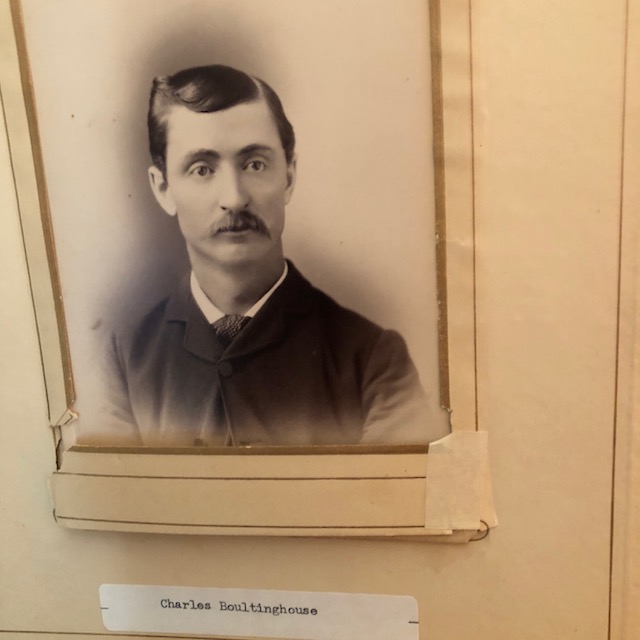
Charles Boultinghouse
Charles Amos Boultinghouse

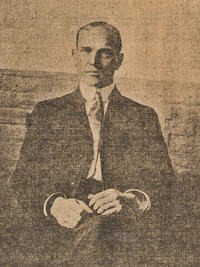
Okay, I agree…Uncle Charlie is not bearded. BUT I have few pictures of my long ago ancestors. He was the only one who sported facial hair so he won the spotlight for this week. Introducing Charles Amos Boultinghouse (1857-1930), my 2nd great uncle.

Uncle Charley lived through changing times from a childhood spent in the shadow of the Civil War…from adolescence spent in migrating from Illinois to the unknown plains of Kansas…from adulthood spent learning to be a fireman in a capital city. Add to that the magic of venturing with friends to the Yukon and the Klondike Gold Rush in 1898.

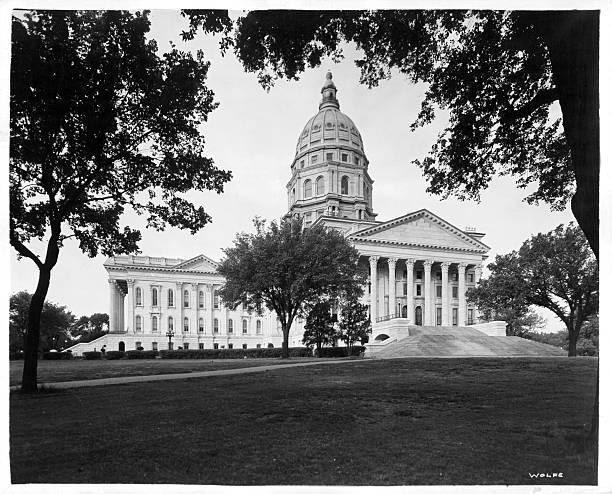
It has been less than a year since I met Uncle Charley face to face. Before that, he was just a name in the list of children of my 2nd great grandparents. When my cousin Nicky shared the contents of an old family album, Charles appeared. Who was he? Where could I start with knowing him as a person? The 1887 edition of the City Directory told me that he was a fireman in Topeka, Kansas. He was with Engine Company One and rented a room in the city hall. How did you become a firefighter…the rest of his family stayed either in DuPage County, Illinois, or Osborne County, Kansas, where they farmed and homesteaded? His death certificate listed him as “retired fireman”.

He was married for a time to a widow with three living children: Olivia Jones Lodge. According to the 1900 Census, Olive ran a boarding house in downtown Topeka; and Charley was one of her boarders. By 1910, they were married…Olivia lived in the boarding house while Charley lived in a room at the fire station. Another mystery about Uncle Charley and his life appears.

Just this past week, I searched the Kansas State Historical Society for records about Topeka’s fire department.  I hit pay dirt: personnel records for the firefighters are searchable. So…this is where Uncle Charley’s story is leading me now.

Sometimes, the smallest introduction becomes the beginning of another friendship. Here is to you, Uncle Charley.

52 Ancestors In 52 Weeks: Frightening

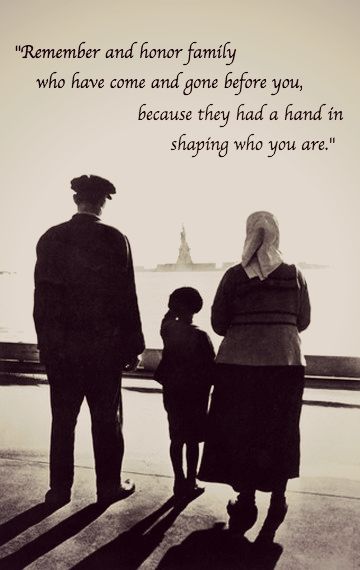
What is frightening lies in the heart of the beholder as some authors have observed. A meaning of frightening can be that which brings anxiety…that which is outside one’s comfort zone…that which creates uncertainty and discomfort in one’s mind, heart, and soul. Did these ancestors of mine know the meaning of frightening as such?

download (1)

George Soule was an indentured servant who came with the Winslow family aboard the Mayflower in 1620. The ship was originally headed to the Virginia Colony so that they could settle north of Jamestown; however, the ship was blown off course. Was George one of the puke stockings about whom the sailors jeered and teased? Was this new journey in his life perceived as frightening?

1222120330.62

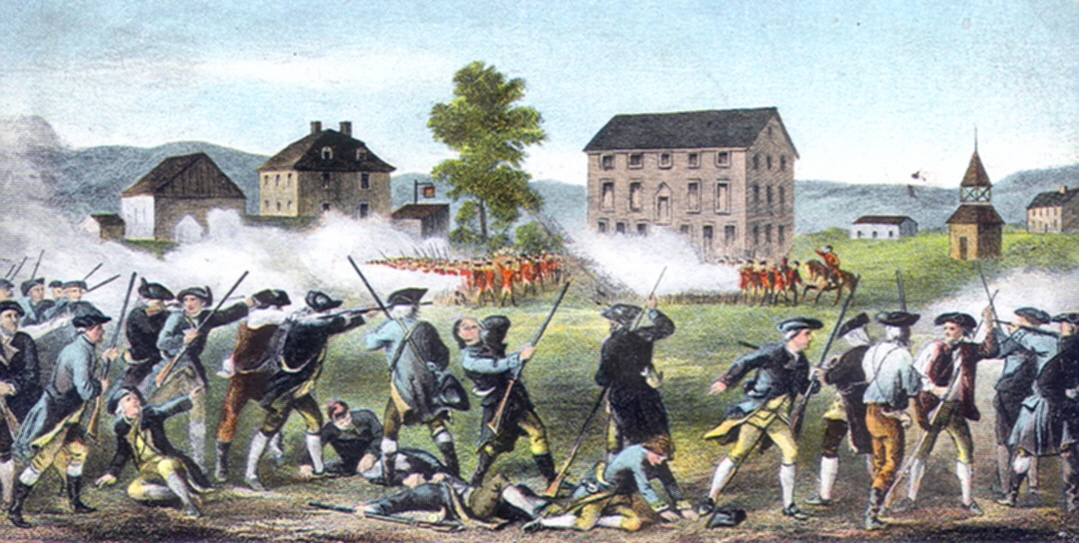
Hannah Frost Mears was the wife of Benjamin Dows (Dowse). On April 19, 1775, her husband joined other Minute Men when the call was sounded to go to Lexington. The men were joining forces against King George’s soldiers. What would this truly mean for their future lives? Was this rebellious action in their lives grasped as frightening?


ba55afb8-2d89-42a3-a496-84a9c4a5fdb1

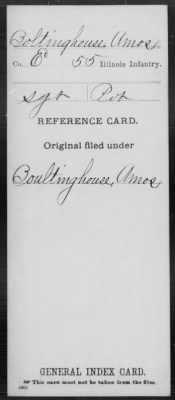
Maria Magdalene Kramer had come to America in the early 1840s from France. She was a school girl raised in a convent. At the tender age of 15, she married 25 year old Amos Howell Boultinghouse who swept her off from Manhattan to the plains of Illinois. She became a farmer’s wife. When they had been married less than 20 years, her husband enlisted in the Union Army…55th Illinois, E Company. She was left to take care of her children and a farm with an uncertain return of Amos. Did she feel isolated? Was this time of her life felt as a frightening hardship to try her soul?

download

Andrew Earl Storer lived with his wife Isabella Mary Boultinghouse and two young daughters on a Kansas farm at the start of the Depression. Income was unsteady. Dust storms were ravaging the fields. His father suffered from emphysema which affected his ability to farm. Several of his brothers and sisters were moving their families to the golden state of California. Andrew’s family and his parents decided to stay rooted to their farms and wait it out. Was this decision a frightening fear of the unknown?

gettyimages-179672290-612x612

Merna Mae Storer had grown up on that mentioned Kansas farm. She was determined to move to the city of Topeka. She was also determined that she would not be staying and doing man’s work. After graduation at the age of 17, she packed her suitcase and rode the train to the state capital. She had gotten a job as a secretary. World War II had begun, and women were needed to fill men’s shoes. Did she find it frightening to venture out and grow quickly into adulthood?

These grandparent ancestors along with my mother overcame a form of fright to create new visions and life goals. Can frightening lead to fortifying and defining? Family history has proven it to be true and beautifully so.


52 Ancestors In 52 Weeks: Cause Of Death

2d732199-4706-4dc6-bf35-096e509596b0

Well, here is the true story about Crazy Bill. He earned a place among the famous and infamous of Franklin County, Pennsylvania. He was the last of his kind. Yep, his last photo that was taken in 1912 hangs in a historical society’s board room to remind bers of his last days on Earth. How did Bill meet his Maker?

William F. Reed, according to the 1910 Federal Census, lived with his wife Sarah in Quincy Township. He was a laborer in a foundry. He and Sarah had been married for one year, and Sarah’s eight year daughter lived with them as well. Well, some of that information was not true: Bill and Sarah were not married.

In the spring of the next year, Sarah took a job at the Pennsylvania State Forestry School in the nearby township of Mont Alto. She worked in the kitchen and  lived at the school. She and Bill had split up. Bill was not happy about that. One morning in May, he took the trolley to Mont Alto. He wanted to see Sarah, and he wanted the pictures and letters he has sent her back. He intended to confront her that very day and get back his property. When he arrived, he found her in the kitchen. He told her what he wanted. She replied that the articles were in her room, and she would get them. When she returned and handed him what he came for, he told her that some letters and pictures were missing from the stack. She informed him that she had burned the missing pieces. Bill became enraged. He took out a gun and shoot her three times. He left the school and reboarded the trolley home. He told the conductor and passengers that he had just hurt his girl…she was hurt bad…

Over a hundred years later, I would meet William F. Reed. I was working on my husband’s family tree as I added his 2nd great uncle. Ancestry had a copy of his Pennsylvania Death Certificate. As I read it over, my eyes opened wide. The primary cause of death was hanging and fracture of vertebrae. The secondary cause was listed as legal execution. I started a newspaper search to find out exactly who William F. Reed was…he was the last man executed by hanging for murder in Franklin County. Sheriff Walker maintained that Bill went to the gallows in a calm manner. Before his final walk, he asked that everyone forgive him…he had already forgiven those who hurt him. So, Crazy Bill passed into Eternity with forgiveness in his heart.

Note: In the above picture, Bill’s hands are bound with handcuffs as he awaits trial.