52 Ancestors In 52 Weeks: Going To The Chapel

Several mysteries shroud my second great grandparents’ story. One is the circumstances of their first meeting. Here he was Amos Howell Boultinghouse, farmer boy from Illinois. Here she was Maria Magdalina Kramer, French immigrant living in Manhattan, New York. In 1843, they were married when he was 25 years old, and she was 15 years old…a man, seasoned by hard work and survival, and a teenager, seasoned by lessons in a convent school. When I first met them, I wondered if she were a mail order bride. Now that would be a mystery to solve!

Then, I discovered that Amos had been in the U.S. Army when he enlisted at the age of 19. In perusing his records, I noted that he had been stationed at Fort Columbus, New York, at the time of the marriage.  This fort was the major defender of New York harbor. It was located about six miles from Manhattan. Yet how did they meet?

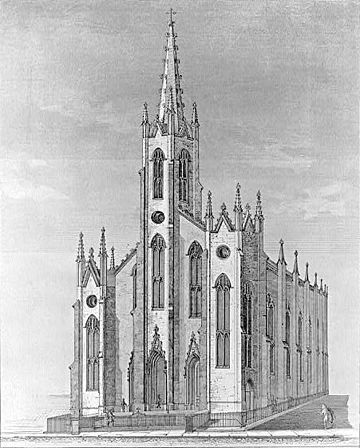
They were married in the Church of Saint Nicholas, the first German-speaking Roman Catholic Church in Manhattan by Father Gabriel Rumpler. Their marriage certificate was found among Amos’ Civil War pension records. I decided to do more investigation. If she was 15, who signed for her to marry? I had never found her parents’ names or immigration records. Would other facts come to light if the church archives were consulted?

StNicholasRC1848ExtSince this parish no longer exists, I did locate the church where its records are stored. The parish secretary told me that the records from 1843 were there. Because of their age, these could not be scanned…they could be transcribed if they were readable. (I prayed they could be read.) A few weeks later, the transcription arrived in the mail. Well, here comes the bride…Maria had lied about her age and stated she was 22 years old. Another discovery on the record was Amos’ surname…it is Boultinghouse, and it was recorded as Boardinghouse.

Going to the chapel, I discovered that Maria was not a mail order bride…she claimed to be seven years older…the two witnesses at the ceremony were other priests who resided in that parish. Time would bring Amos and Maria many hard decisions, many devastating losses, and, perhaps, many joys.


52 Ancestors In 52 Weeks: Far Away

Mist

The mist places a veil over my head, and I cannot see ahead. Am I lost or just seeking? Will I find my way, or will I try to turn back to return from where I came? I am searching but can find nothing. Is it hopeless?

The mental picture of lost in the mist is what clouds my brain when I am looking for the answers to a genealogical puzzle…and it is not even in my family tree…it is about my husband’s third great grandparents.

Benjamin and Julianna Beeson Haffner were married on 21 December 1825 in Martinsburg, Berkeley County, Virginia. They would have six children, but only four would reach adulthood. During the Civil War, this part of Virginia would become part of the new state of West Virginia. Little is known of them. Benjamin was listed in the 1850 and 1860 Census as a plowmaker. In the 1850 Census, he declared that he was a pauper.

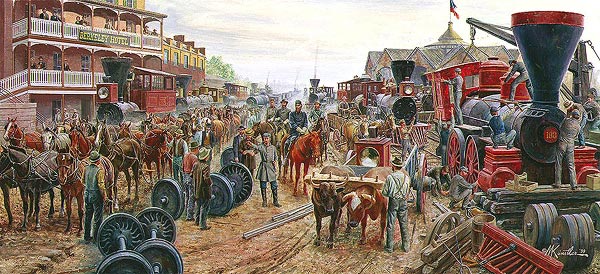
During the Civil War, Martinsburg stood in the midst of the Shenandoah Valley Campaign. General Thomas J. Jackson commandeered trains and tracks right in the city so Union forces could not ship soldiers and supplies. The trains were moved over land to Strasburg. There were turmoil and chaos surrounding the city and its citizens408_2.

But what of Benjamin and Julianna? Did they survive the war? They completely disappear after that 1860 Census…as if vanishing in the mist. They can be traced to no final resting places. Some day, I want to see them coming toward me as they break through the mist, and the veil of separation is no more.

52 Ancestors In 52 Weeks, Week 21: Military

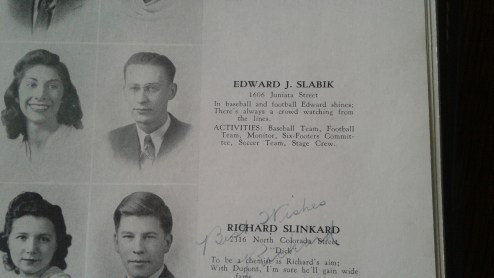
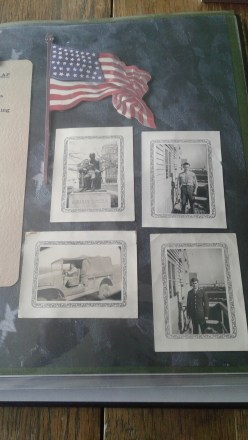
On that Sunday morning in December, he was returning from Mass with his family in a Nicetown/Philadelphia ethnic neighborhood. As the family walked home, a neighbor burst out of his house to flag them down. The neighbor knew that the Slabiks did not have a radio, but he extended the invitation for them to step inside his house to listen to an ongoing news broadcast. The news was numbing and unimaginable, but after all parts of Europe were already at war. What…this happened at Pearl Harbor? His brother Stanley was in the Army and had been just a year ago stationed in Honolulu. The Japanese…why was the world crashing down?

When he returned to high school the next day, all his buddies were ranting against the attack. Graduation could not come too soon, for they wanted to enlist right away and save America…save the world. They often bragged about seeing each other in Tokyo a year from now. The minimum age to enlist was 18 years old, and Edward would not reach that age until next November. Patriotism called…how could he wait?20180619_151902

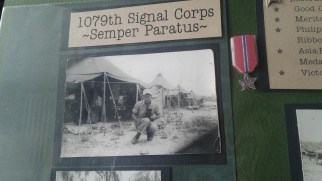
After a June, 1942, graduation, he began to figure out how he could enlist. He would “create” a new birthdate. After all, a birth certificate was not entirely necessary; one could have a witness testify about that birthdate. He would only be fudging a few months since Uncle Sam and the United States needed him. Instead of stating that he was born on 6 November 1924, he and his witness declared the date as 1 September 1924. (On another document, he stated that it was 6 September 1924.) He enlisted in the United States Army Air Force. He would be trained to fight in combat.

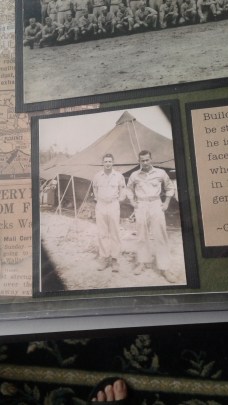
While in basic training at Indiantown Gap, Pennsylvania, he and the rest of his new buddies were given nicknames that would remain with them for the duration of the war. Edward enjoyed humor and laughter and playing pranks, so he was nicknamed “Silly From Philly”. Perhaps, that humor saved his sanity when he was fighting the Japanese in the Pacific Theater.

20180619_151958 (1)20180619_15203520180619_152020

Edward would return from war in December, 1945, to that ethnic neighborhood in Philadelphia. He came home to his parents and neighbors. He was 21 years old. His mother was alarmed at how jaundiced and skinny her boy Edjui (Polish for Edward) looked. He was home safe…America was also safe.

It would be four years later in December, 1949, when I would first meet my father. He and my mother had married in 1947 after becoming war time sweethearts…but that is another story!

52 Ancestors In 52 Weeks, Week 20: Another Language

Growing up in the Shenandoah Valley of Virginia, we were surrounded by apple orchards and farms. Our little town of Winchester had National Fruit Products which made such delights as applesauce and apple butter…the aromas permeated the town. I lived in a white and blue collar neighborhood. I spoke with a Southern accent, and my speech was peppered with many idioms and colloquialisms.

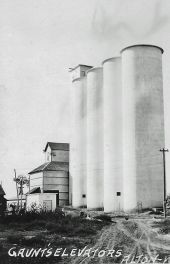
Every summer, we would travel to my grandparents’ farm in Alton, Osborne County, Kansas. My Gramps and Grammy were Andrew and Isabella (Boultinghouse) Storer, my mom’s parents. Their farm seemed vast to me with acres of crops, outbuildings, and animals. A river bobbed along the edge of the property. When we visited there, I heard another language being spoken. What did some of those phrases mean? My grandfather would talk about checking out the Angus on the north forty. Angus? North forty? When he feed the pigs, he would yell out words that sounded like “Sue Whee” with a high accent on the second syllable. Those porkers would come running for slop. One time, he mentioned how flat the land was…but then he spoke about how the Kansas mountains were lined up from town to town along the highways. Living under the shadow of Virginia’s Blue Ridge Mountains, I certainly could not see those Kansas mountains. Little did I know, but they were another name for grain elevators.

Alton4My grandmother also spoke in another language. Each morning, she told us that she had to go milk the nannies. I was instructed to gather the hen fruit and bring it to the kitchen. I asked what trees it was on…she laughed and told me to go to the chicken coop with a basket…I would spot it in the little nests in there. My grammy also kept egg money  in a can in her kitchen, and she said she could use it when she went to town on Saturdays…all gussied up she would be.
My grandparents had a strange phone number which wasn’t numbers at all. Their number was two longs and one short. Their neighbors had similar numbers made up of different longs and shorts. We were to answer the phone on the wall only when their longs and short sounded; otherwise, we would be hearing people talk on a party line. That would not be polite.

My mom understood completely what all they were talking about, but I am sure that my dad was also puzzled. My dad was from Philadelphia, and he was a city boy with Polish immigrant parents. Did it take him long to catch on to this Midwest lingo?

I miss my grandparents and parents. I wish I could once again walk on that farm, gather eggs, drink goat’s milk, slop hogs, and get all gussied up on Saturdays.

52ancestors-sidebar-1


52 Ancestors In 52 Weeks: Mother’s Day

In our little town, a church’s billboard reads: TO ALL OF OUR MOTHERS IN HEAVEN, YOU ARE LOVED AND MISSED. How true with many of us as we greet this Mother’s Day! Memories flood and swell inside our hearts as we imagine and remember our mother’s voices, words, actions, and images. We embrace how our moms grew from those strong, young women to those delicate yet iron-willed senior ladies.


20180513_122322
Falls Church, Virginia   1950

In honor of my mother, Merna Mae Storer Slabik (1924-2014), I would like to share some of the lessons that I learned from her… I bet many of these resonate with you also.

  • “I will teach you to be independent.” My mom wanted me to be able to do things for myself even at a young age. She wanted me to develop my own talents. She wanted me to be my own person.
  • “You cannot change that person so do not even try.” Mom longed for me to enjoy each person in his/her own way. We all have different personalities…accept everyone.
  • “Go ask your father.” Mom did not want anything to be a deal breaker between herself and my father. She was leaving it all up to him in that particular case.
  • “We are huggers.” Mom wanted to leave each person with a warm hug and a warm smile.
  • “You have to earn that…you will do chores for an allowance…you will save.” It started at the age of five when I asked for roller skates. Mom told me that I would start to dry the silverware (age appropriate) for a nickel a week. I got the skates, but I learned to work with a goal in mind. That lesson would be a premise of my being.
  • (Message on my answering machine at least once a week) “Hi, it’s me Mom. Give me a call back when you can.” I wish I would have saved one of those messages!
  • At the end of each visit and phone call, my mom would say, “Remember that I love you.” Those three words taught me more lessons than any combined.

I love you, too, Mom!


52 Ancestors In 52 Weeks: Close Up

In a classic American film, the main character beckons, “All right, Mr. Demille, I am ready for my close up!” The character poses as if acting in a silent film. The scene is just a snippet of the movie, but it eludes the faded charism of that character. Classic and not forgotten…

My father’s mother, Anna Mroz, died two months before my parents were married so I never knew her. My father and his sister would speak of her in endearing terms and phrases, such as “My mother always…” They spoke of her with respectful and reverential admiration, but she was not mentioned often. As a child, I never even so much as saw a photo of her or visited her grave. She faded into the background of my awareness…my babcia (Polish for “grandmother”).

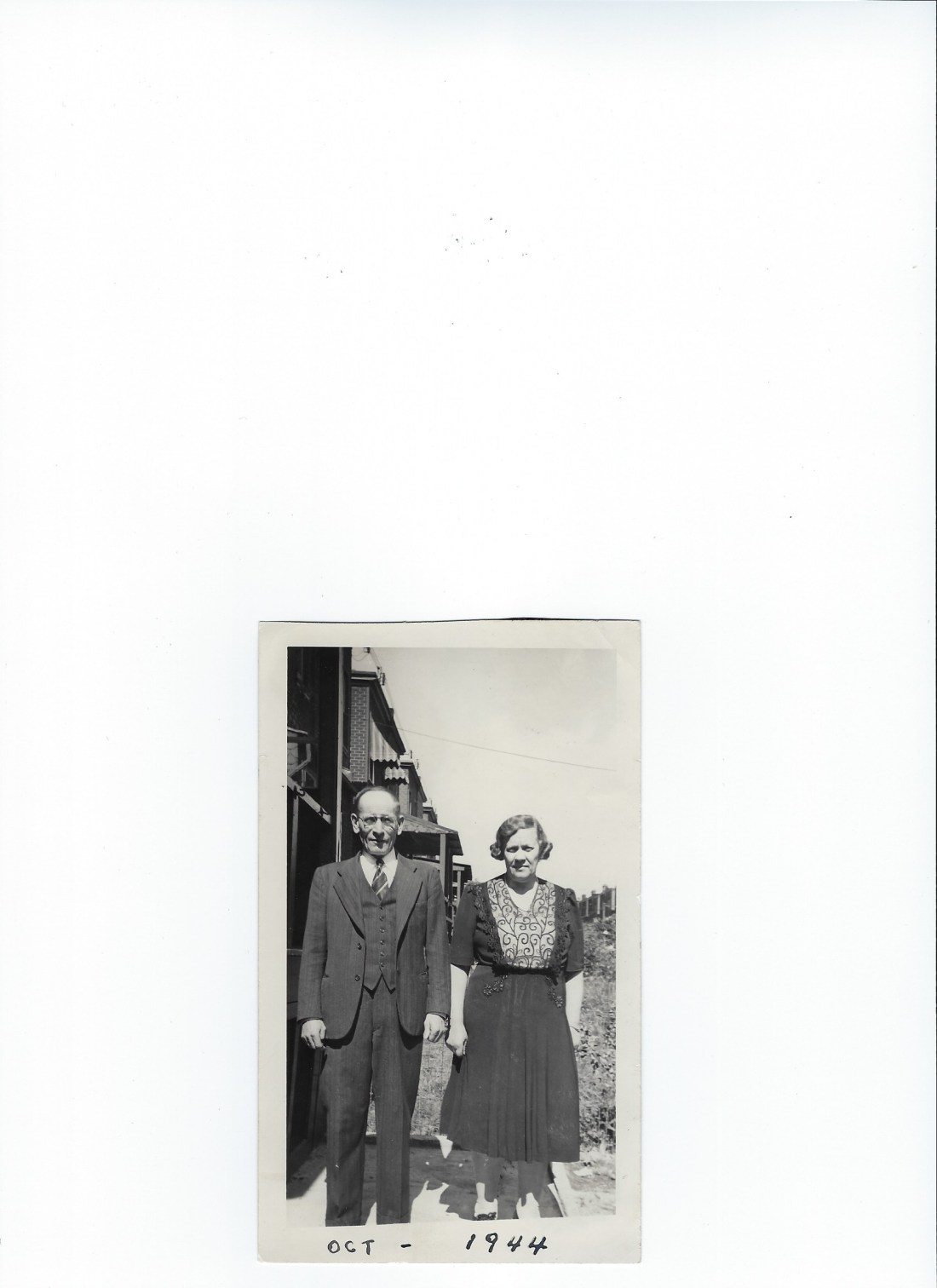
When I became interested in family history, she was one of the first persons entered on my family tree. (I wrote about this grandmother in a previous blog entry, The Case Of The Baffling Babcia.)  Who was she? What could I discover about her? Who would know anything? Where could I look? At that time, my father’s sister was still living. When my babcia was debilitated by cancer, she and my dziadek (Polish for “grandfather”) lived with my aunt and her family. I turned to my aunt for help but learned very little. She did pass on two pictures of my babcia…one with my dad when he was a little boy and one with my dziadek. In both pictures, I could not really see her face the way I wanted.

In time, I kept thinking of places where I might find records of her…marriage license and certificate, funeral card, naturalization record index. What could I glean from this information? I sent for Anna’s naturalization papers, and I had read that these papers would contain a photo. Maybe at last, I could see her face close up. I was ready for her close up! When the papers arrived, I was not to be disappointed…there she was…I could see her clearly. There was even a physical description of her…oh, my goodness…we have the same body build.

How glorious, dear babcia, to see you close up…classic and not forgotten! One day, I will meet you face to face as we live together in God’s kingdom…

Anna naturalization

52 Ancestors In 52 Weeks, Week 17: Cemetery

As Memorial Day graces May’s calendar, the veterans stand one behind the other in column upon column. As far as one’s eyes can see, the solemnity of the occasion beckons one to appreciate the service of these men and women. Many of the veterans have spouses right near them to accompany them on their journey to eternity. Sacrifices made…destinies, perhaps, altered…lifetimes influenced. In the distance, rifles volley to send out tributes and one final salute. All are at peace in this serene and soothing burial place.

Indiantown Gap National Cemetery rests in Lebanon County, Pennsylvania. Nearby is an Army complex that holds a history of training young men and women for service in U.S. Army. It was at this complex in 1942 that my father, Edward Joseph Slabik, came at the age of 17 to train in the Army Air Force. Young men could enlist for duty at the age of 18, but my dad had “fudged” his birth date by a few months. About three years later, he would return here to be honorably discharged…on to begin a different life at the age of 21. At that moment, he did not think that one day a part of him would stay here forever.

In time, he married my mom, Merna Mae Storer, who became his wartime sweetheart. They raised their family, retired, grew old together. In planning for the end of their earthly lives, they decided to be buried at Indiantown Gap. They had driven there one day to inquire about a place for them. They were struck by the serenity and care of the grounds. This was where they would rest.

Dad             Mom

When one visits there, one is struck by all the names. One cannot help wonder what stories could be told, cherished, and remembered. Tears will be shed, and hearts will sigh. Day is done, gone the sun…safely rest…God is nigh…go to sleep…peaceful sleep.


52 Ancestors In 52 Weeks, Week 16: Storms

In the summer of 1874, the storms began in the deserts in Arizona and swept across the plains to the east. In time, they alighted in Osborne County, Kansas, where they had suffered from drought the month before. Blackness gripped the horizons…witnesses swore they were watching a solar eclipse. One could hear the rain marching across fields of crops and gardens…marching onward. The storm would last for eight days, and it would do nothing to bring relief to the water hungry soil. It would not drench the land; instead, it would drain the land and its tillers. Instead, it would leave devastation that would remind its survivors of an Old Testament plague.

When the families realized what was happening in the fields, in the gardens, and in their homes, it was incomprehensible. The blackness was gouging the crops. It was stripping the gardens. It was robbing their homes. Why, even the wool on sheep and the clothing on wall pegs were taken! What could be done to stop this destructive swarm of marauders? Only prayers, determination, resilience could fight this battle. The prairie winds would carry the swarm away from Kansas and into other plains states.

clearning_a_field_of_grasshoppers  After the land and homes were ravaged, the survivors set to work raking and burning. What else could they do to rid themselves of the pestilence? What good would come from this? That year’s crops, fruits, vegetables were gone. Would some of the settlers stay to face the future, and would some flee to begin again elsewhere?

In time, one fourth of the people of Osborne County would move elsewhere. The loss of crops and food was too devastating…the grasshoppers had run them off their homesteads. My people chose to stay…to begin again…to face what would come next. And this is part of my story of how I inherited resiliency and perseverance.


52 Ancestors In 52 Weeks, Week 15: Taxes

MissScarlett      No, y’all, we do not have any family stories about taxes, such as the time Grandma Scarlett told Miss Mammy to tear the velveteen curtains off the wall so that they could be made in a dress that would make Grandpa Rhett, who was in jail, agree to pay the county taxes on Tara. No, m’am…no, sir. What we do have are times that ancestors might have thought, “This just taxes me to no end. As God is my witness, I will never be hungry again.”

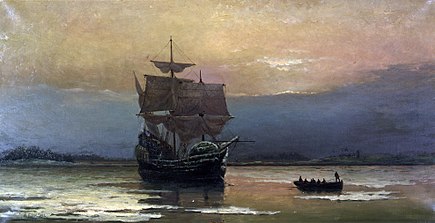
High up on the family tree, we have Grandpa George Soule who arrived on the Mayflower as an indentured servant in 1620. That first winter in Plymouth was deadly to more than half of those people. Grandpa George survived the hunger and sickness that claimed others. With all his strength, he must have vowed to survive…to live on…to look beyond the taxing demands of that moment…to be never hungry again.

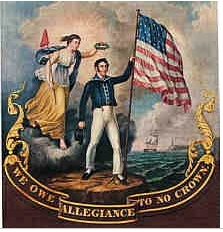
Shaking a few nearby branches, we find Grandpa Joseph Story. Just a young family man of 25 years in 1777…lives in New Hampshire. He does it…he signs his name to a loyalty association. “WE, the Subscribers, do hereby solemnly engage, and promise, that we will, to the utmost of our Power, at the Risque of our Lives and Fortunes, with ARMS, oppose the Hostile Proceedings of the British Fleets, and Armies, against the United American COLONIES.”  He hungers for the separation of the Colonies and the Crown. He joins Benjamin Sias’ New Hampshire Regiment. In a few years, he will hunger no more as a citizen of the newborn United States.

Reaching across another limb, Mary Etta Soule, born in New York, presents herself. Just as her Grandpa Soule came across an ocean, she came down the Erie Canal with her family in the early 1850s. He married Grandpa Andrew Storer. Remember him from a previous blog? He had wanderlust. Mary and family migrated from territory to territory settling here and there…Wisconsin, Minnesota, Iowa.  Was that taxing to her to have no permanent home? When they finally settled in Kansas, was that hunger finally satisfied?

Generations of my family survived the taxing effects of the Civil War, World Wars I and II, the Depression, immigration to a new land, and other challenges. The beacons of hope and strength shone when they were hungry no more, as God is their witness.


52 Ancestors In 52 Weeks, Week 14: Maiden Aunt

As she faced out to sea, the splash of the currents moved up against her. Her eyes steadily surveyed the horizon…beyond that horizon lie the continents of Europe and Africa. Many a sailor had called out to her, many a voyager had whispered a greeting, many a peasant had sighed her name.  She longed to embrace all men, women, and children who gazed upon her face. Her presence was a gift to all, and she longed to care for those who sought her ideals. Yet, she was married to no one.

She remained constant in her duties, she remained constant in her vigil. She stood fast and firm-footed on the pedestal on which men had placed her. Her vision was theirs, and their loyalty was hers. She remained faithful, true, and steadfast. Yet, she was married to no one.

She carried a torch to light the way. She carried a torch to proclaim a sacred message. In return, many carried a torch for her in their hearts and souls. In people’s minds, she was often coupled with Life and the Pursuit of Happiness…or Pursuit of Property as her forebear Mr. Jefferson had stated. She stood on her own. Yet, she was married to no one.

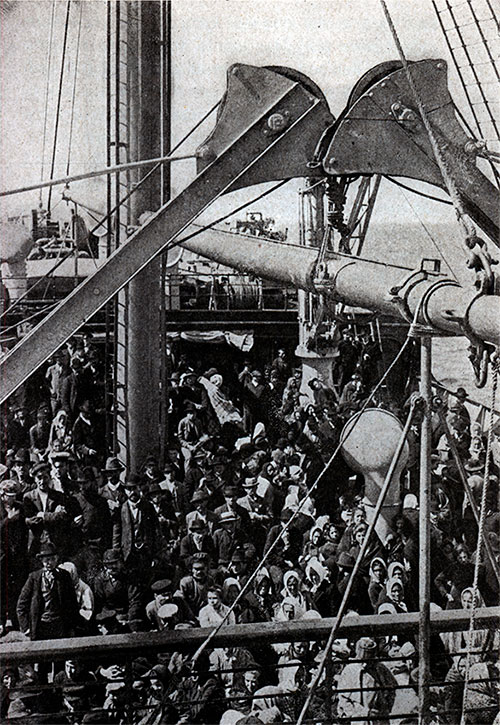
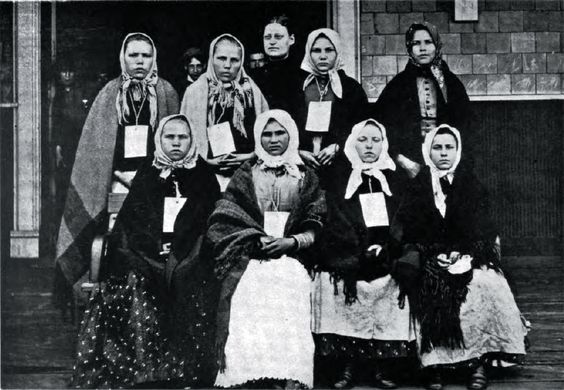
ellisi  In 1906 and 1912, she was the basis of the welcoming committee for my grandparents. Hers was the first face they saw in America…this grand lady who embraced them and called them forward. Committed to serving and enlightening, she welcomed my father’s family to her shores. Thank you, Lady Liberty.

*************************************************************************************

For this week’s prompt, I played very, very loosely with the words. When I searched my family tree, I could not find a maiden aunt from the last two and one half centuries. (Yes, really.) So…I saw Lady Liberty as an unmarried woman who was committed to her calling. Forgive me if the connection seems so farfetched.