52 Ancestors In 52 Weeks: Reunion

Last October, I had walked down the lane to my fourth great grandparents’ home…to Joseph and Rachel (Low) Storer’s farm. As I ambled around the bend in my dreams and imagined wanderings, I anxiously awaited my initial meeting with them. The time was about 1820. I had told them of their children, grandchildren, and great grandchildren who in the future would migrate and pioneer themselves across the nation.

Today, this second visit would be a reunion of sorts. I was interested in why they had moved on from Massachusetts to New Hampshire to Maine. What drew them on to start over twice? To clear the land and build homes? To be self-sufficient in meeting all their family’s needs? To raise children devoted to the land and to the new nation?

I was curious about what encompassed Joseph’s day with farm work. How and what did he teach his sons? In what ways did he share his knowledge about animal husbandry and livestock management? What services and goods did he use to barter with his neighbors?

I was curious about what encompassed Rachel’s day with child care and food preparation. How and what did she teach her daughters? In what ways did she share about gathering herbs and wild berries? What did the girls learn about making clothes? How did her family socialize with neighbors, or were they isolated?

As parents, did they share God’s Word by reading from the Bible each evening? By praying together? Could they themselves read and write? Many, many questions would be asked.

A reunion is a cherished time with those one loves. Sometimes, that time is short and brief. Sometimes, questions go unanswered. Sometimes, much is shared and divulged. Always as the parting ends the visit, hugs and blessings are exchanged.

52 Ancestors In 52 Weeks: Independence

After the French and Indian War, many citizens of the colony of New Hampshire yearned for a different relationship with the Crown. Why not play by their own rules? Ideas, discussions, and debates took place among those citizens… the winds of revolution in Boston blew in their direction. By 1774, they were ready to prepare themselves to pledge their lives, fortunes, and sacred honor. A year later, gunpowder would ignite as the King’s Army faced the Minute Men. Joseph and Rachel Story would receive word that their nephew Jesse Story had been killed at the Battle of Bunker Hill.

The Joseph Story family lived in Hopkinton, Merrimack, New Hampshire in 1776. He and Rachel had been married for three years; he was 25 years old with two small children. They farmed the land. In that year, the colony requested that those who sided with the Patriot cause sign an association test. Joseph along with his family members Jeremiah and Zechariah signed the test. The pledge reads as follows: “WE, the Subscribers, do hereby solemnly engage, and promise, that we will, to the utmost of our Power, at the Risque of our Lives and Fortunes, with ARMS, oppose the Hostile Proceedings of the British Fleets, and Armies, against the United American COLONIES.”

Joseph wanted to do more than sign the test. How could he pledge his sacred honor? He joined the fight by enlisting in Captain Benjamin Sias’ troops who were under Stickney’s Regiment of Militia. He enlisted in April 1777 and stayed with the troops until they disbanded in that October. What all he faced in battle and on the field was not been recorded by him…perhaps, he told those tales when he returned to his family.

His tale of standing with the Patriots as his wife took care of family and farm was a common one from those revolutionary times. “Independence!” was their cry and creed. Thank you, Joseph and Rachel.

52 Ancestors In 52 Weeks: Legend

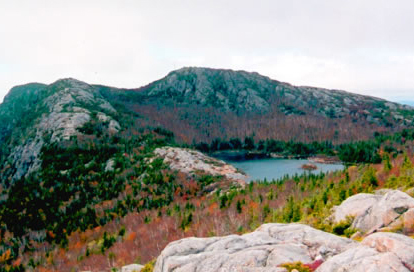
The legends banded together and settled near the hills and waters of Franklin County, Maine. Born in the coastal town of Ipswich, Massachusetts, they longed for land near water. Having also lived in New Hampshire, this family knew the closeness of hills and mountains. This would be a settling in and home-making for the patriarch and matriarch. Time would bring other choices to some of their children.

The legends, or as they appeared to their descendants, came from families that had settled in the Massachusetts Bay Colony in the mid 1600s. The men had been ships’ carpenters, millers, farmers, and highway surveyors. The women had worked tirelessly by their husbands’ sides. Ipswich was their first homes.

The legends’ surname was Story…also spelled Storey. It was after their move to Maine that a spelling change would evolve. The tale goes that when patriarch Joseph registered the deed to his farm, the county clerk recorded his last name with the spelling Storer. From then on, many family members chose the Storer spelling.

The patriarch and matriarch of this telling are Joseph Story/Storer and wife Rachel Low. During the next four weeks, their legend will be revealed through the prompts from 52 Ancestors in 52 Weeks. Until we meet again…

52 Ancestors In 52 Weeks: Earliest

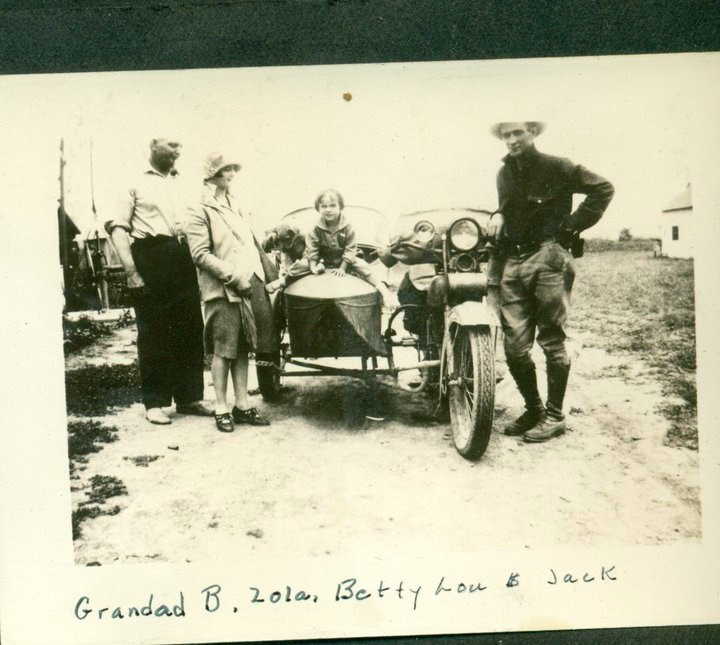
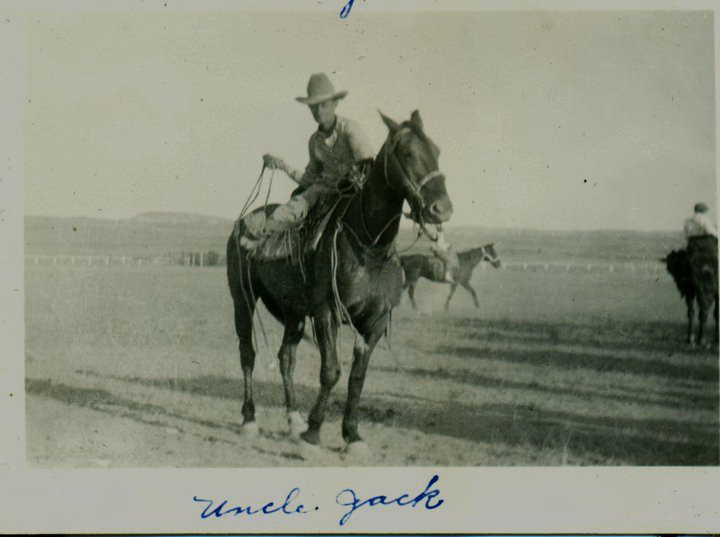
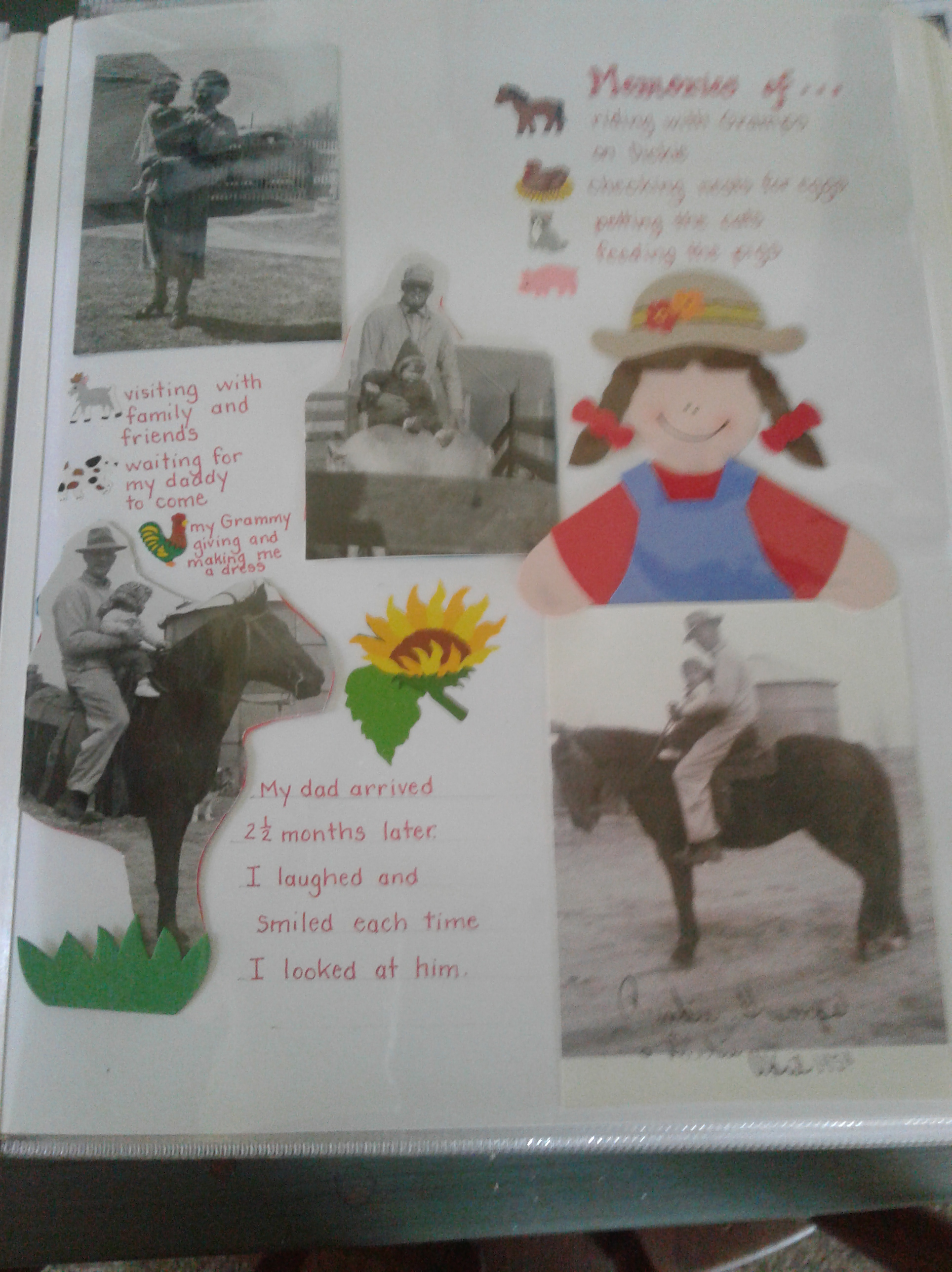
My earliest memory of him was riding together on his horse. I was bundled up in a baby coat with a scarf wrapped around my head. He wore his farm jacket as he held on tightly to me. My mother had lifted me up to him so he could place me safely on the saddle in front of him. We rode out to check a pasture and his Black Angus cattle. He was my Gramps, and I was his little Punkie. All was right in my precious world. I wonder what stories he told me as we plodded along the trail through the pastures. Did he explain to me about farming? Did he share with me tips on handling horses?

My earliest memory of her was being held in her arms as we walked around the farmhouse and chicken coop. She instructed me in how to gently pick up a hen’s egg from a nest. Some of her hens she called by name as she taught me how to make clucking sounds. She was my Grammy, and I was her little Punkie. All was right in my precious world. What did I learn about chicks and chickens that day? What stories were there about the roosters strutting around the yard?

Earliest memories can lay the foundation of what remains of our recollections of grandparents and parents. How treasured these memories are…how revered…how engraved on our hearts! In the winter of 1951, my mother and I flew from Washington, D.C., to Salina, Kansas, to visit with my Gramps and Grammy (Andrew and Isabella Storer) for the first time. My father would join us two months later. (My dad was a city boy.) On the farm in Kansas, a little city girl like me learned about horses, chickens, pigs, cattle, dogs, and cats. Earliest memories…earliest dreams…

52 Ancestors In 52 Weeks: Diary

Dear Diary, today I listened to a message on our answering machine. The content left me stunned and teary-eyed. The gentleman caller stated that he was not sure if he had the correct number. He was calling from Colorado. He had found our phone number in his desk as he was cleaning out. He said he was trying to reach Merna Mae Storer. Would Merna Mae please call him back as he wanted to chat? He did not state his name.

Merna Mae is my mother, who passed away five years ago. I knew from some of the caller’s clues that he was my mother’s cousin Mitch…my cousin, too. I decided to call him back, but first I had to regain my composure. He answered on the first ring, “Hello, this is Mitch.” I introduced myself and told him about my mom. He stated that he had wondered why he had not heard from her. They had graduated from high school together and would meet up at their annual reunions.

He went on to tell me that he is now 96 years old. His wife died in 1977, and he has remained unmarried. He works in his yard. His favorite activity is volunteering weekly at the Wings Over The Rockies Air And Space Museum in Denver. Staying busy has helped him remain young in body and spirit.

We only talked for 10 minutes or less. He baited me…little did he know…when he said, “That Merna Mae was a real little lady growing up.” I am calling him back soon. My gentleman caller knows stories and tales about the Stevens side of my family! I am collecting questions for Mitch.

52 Ancestors In 52 Weeks: Namesake

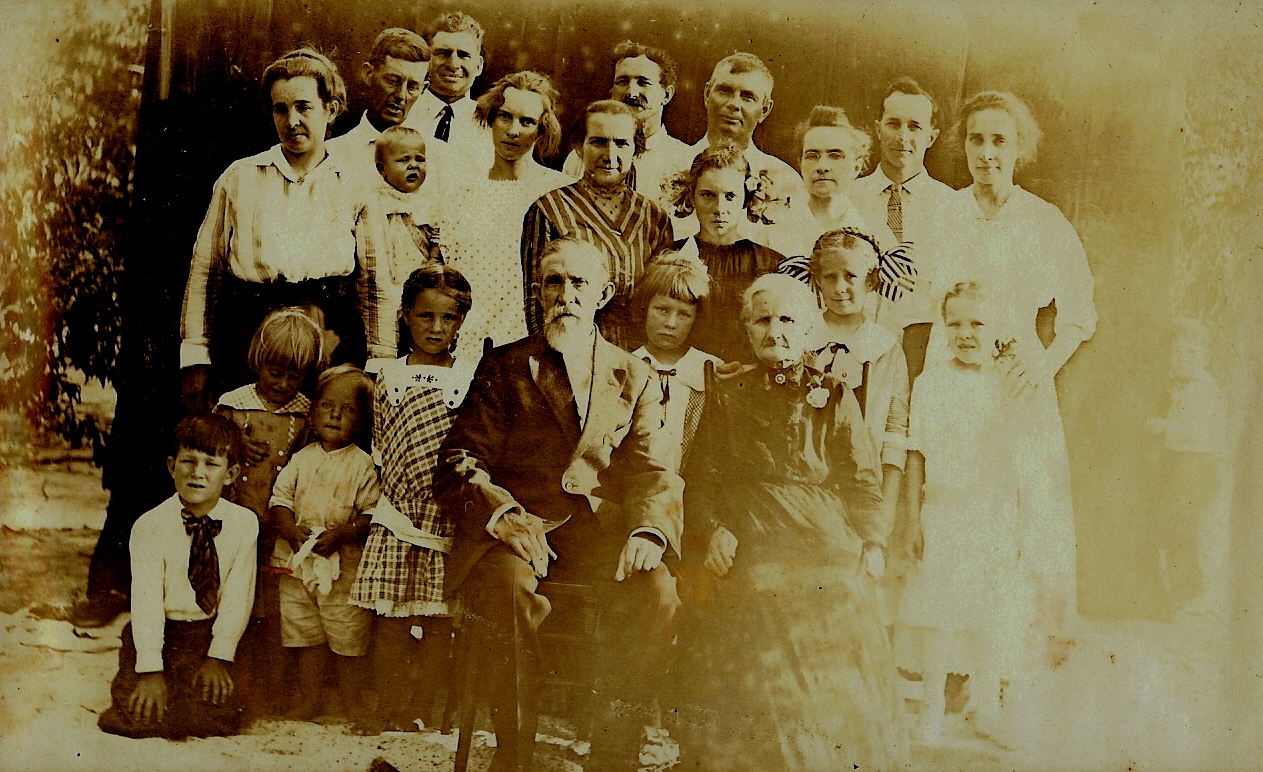
Good gosh, many grandmas are blessed with grandbabies named right after them. What an honor to look into the sweet eyes of a tiny one and call that bundle of preciousness by one’s own name! Why examples can be found just by viewing this picture of a 50th wedding anniversary celebration!

In the front row is Grandma Isabella Anna Couchman Stevens. Born in England, she married her sweetheart William in New York City. (Their first daughter was named Isabella Anna Stevens.) In time, they moved all the way to Kill Creek Township, Osborne County, Kansas. The young girl standing in the row behind the children and beside the lady in the striped dress is Isabella Mary Boultinghouse Storer, Grandma’s namesake. Grandma knew the fine art of dressmaking while Granddaughter knew the fine art of quilting and crocheting. Both ladies understood the value of hard work with their hands.

Now the lady in the striped dress is Naomi Ruth Stevens Boultinghouse…yep, you got it…she is Isabella’s daughter and the young Isabella’s mother. She is named after her grandmother Naomi Orme Stevens, who remained in England. The “Kansas” Naomi had a talent for growing roses and landscaping beautiful front yards. She and her husband ran a small grocery and cafe.The “England” Naomi was a clog maker: she made the pattern cards for jacquard weaving looms. Both ladies understood the value of hard work with their hands.

When I was born, I was named after both of my grandmothers: Isabella Mary and Anna. No, my first name is not Isabella. My parents used her middle name to christen me Mary Anne, which is my first name…I have a middle name…another story will explain that…another time. Unlike my Grammy, I was not given the talents for needlework. I was given the talents for teaching and writing. I understand the value of hard work with my creativity.

Now, raise your hand if any of you gentlemen are named after your grandfathers!

52 Ancestors In 52 Weeks: Cemetery

ANC, Section 27, Site 175

Mary had heard tell that these grounds had once between beautiful beyond description…more than her small town Pennsylvania mind could imagine. She heard tell that the land had been taken in retaliation for a decision that the owner had made. Leaders said he should pay for turning his back on the country that he loved and served…his decision had been to be loyal to his state of Virginia. Therefore, leaders decided his home and grounds would be changed so that he could never return and enjoy this place again. Now here she stood on his property. She and husband David were not here to enjoy the gardens and admire the views. They were here for another type of visitation.

A year earlier (1863), her family had been intact in Franklin County, Pennsylvania. She and her husband parented nine children: eight sons and one daughter. The War Between The States had taken a toll on the nation. Their home was close to Sharpsburg, Maryland, where the Battle of Antietam took many lives in September, 1862. Gettysburg was situated in the next county over where three days of battle claimed more lives in July, 1863. In fact, General Lee had retreated through their town and stopped in the town square to get a drink from the pump for himself and his horse Traveler. In that year, her boys were safe at home and far from battle. Six of her sons were eligible to join the army. In the autumn of that year, five would enlist.

Now here in Arlington, Virginia, she and her husband came to visit the resting place of their son Calvin. As a member of the 126th and 149th Pennsylvania Regiments, 22 year old Calvin had been wounded at Spotsylvania Courthouse, Virginia. Because of the extent of his wounds, he was transferred to Armory Square Hospital in the District of Columbia. Calvin passed away on 18 May 1864. The army had run out of burial spaces so it was decided that the grounds of the Lee-Custis Mansion across the Potomac River would be converted to a cemetery. Calvin was one of the first to be buried there. It had taken a great deal of planning for the family to visit Calvin’s grave. They were here now…paying respects to their beloved son…thinking of the day they would be reunited in the Kingdom of God.

Mary and David Bowman are my husband’s third great grandparents. Calvin is his third great uncle. Today, they are all reunited in the Kingdom of God where no wars rage and where grief grips no one. At peace…

52 Ancestors In 52 Weeks: Military

A mother's tears
Dampened the cheeks of her boys
Bound off to bind the Union back together
As proclaimed by Mr. Lincoln.

A mother's tears
Dampened the photos of sons in uniforms...
Five boys banded in Pennsylvania regiments
Pledging to raise the colors and fight on.

A mother's tears
Dampened the letters sent by the Army
To inform of three wounded and two dead
Heralding loss and grief beyond measure.

A mother's tears
Dampened the personal belongings
Sent from a hospital and a prison
Comforting her with their physical touch.

A mother's tears
Dampened the faces of the returning ones:
David scarred at the Battle of the
Wilderness,
Franklin and Jeremiah marred at
Laurel Hill.

A mother's tears
Dampened the flowers left at graves
In Arlington and in Andersonville
Marking the resting haven of the fallen.

A mother's tears
Dampened the faces of her grandchildren
With the stories of fathers and uncles
Changed forever by red badges of courage.

A mother's tears fell and
Dampened the face of Mary Bowman
My husband's third great grandmother
As she sent her sons to war.


52 Ancestors In 52 Weeks: Nature

Just what was the nature of his intentions? His first wife Abigail and son had died during childbirth. He was alone. Men in his day needed a wife and children to build a homestead. Why, the very answer…the very person…was right in view. Mary Etta was a yard girl at the brickyard where he was the foreman. It was the Wisconsin territory, and women were few. Miss Mary Etta proved herself to be strong and hard-working. So, he took a chance and asked her if she would become his wife. She consented. Andrew Storer and Mary Etta Soule were united in matrimony on 24 July 1852 in Watertown, Wisconsin. She was 19, and he was 35. They pioneered together through many territories and “baby states”.

Just what was the nature of his character? As a young man growing up in Maine, he grew wanderlust in his heart and soul. He moved onto Boston where he worked on the docks but lost his health. He moved back to Maine to regain his strength…that he did. He moved on to Illinois, Wisconsin, Minnesota, and Iowa before he finally settled down in Osborne County, Kansas as a homesteader. He was known for being neighborly, steadfast, relentless, and a chance-taker. He planted these character seeds into his nine children.

Just what was the nature of his business as a farmer? After all, the years of his youth had been spent as a dock worker and brick maker. For a time, he was a successful sheep farmer, a vocation many in Osborne County did not undertake. He earned a grant from an agricultural college in Mississippi so he could grow trees on his property. On the plains, trees could be few and far between. Cottonwoods thrived on his grounds.

Just what was the nature of his legacy? To me, he was my second great grandfather. He left his descendants the abilities to try more than the obvious, the philosophy to move and grew where one is planted, and the courage to be strong-willed.

That is the nature of Andrew Storer’s heart and soul.

52 Ancestors In 52 Weeks: Out Of Place

Arriving In New York, 1854

The trio of girls had several things in common: they came by ship from Europe; they entered this country through New York City; they were children at the time of their immigrations. One was 10 years old, another 12 years old, one 14 years old. One of the girl’s father was a house painter, another’s a peasant farmer, one had an unknown occupation. One child spoke French and German, another English, one Polish. Two were being trained in the arts of needlework and dressmaking while one learned how to be a charwoman. When the girls first came to New York City did they feel out of place? The one girl from London must have felt somewhat at home in Manhattan…bustling, energetic, noisy. The one from France must have felt homesick for the castles nestled along the river of her hometown. The one from Poland must have been mesmerized by the sights and sounds of the huge city. How do children really adjust when they are out of place?

One of the girls had come to America with her mother and her siblings. Her father had died three years before. One of the girls had come to America with other young girls from her town as their parents had all passed away…they were orphans. The remaining girl left behind no records of her New York arrival and parentage. How do children really adjust when they are growing up without a parent/parents…out of place in this world?

The girl from France arrived in New York in about 1840. No records can be found to name her parents. When she was 15 years old, she married a private in the U. S. Army who was ten years her senior. Her name was Maria Magdalen Kramer. In time, she and her husband would settle on a farm in Osborne County, Kansas. She was my second great grandmother. At times, she must have felt out of place in this new country. Eventually, she would feel at home.

The girl from England arrived in New York in 1854. She lived with her mother and siblings. In time, she would marry a Civil War veteran who would also take up farming in Osborne County, Kansas. Her name was Isabella Anna Couchman. She was my second great grandmother. At times, she must have felt out of place in this new country. Eventually, she would feel at home.

The girl from Poland arrived in New York in 1906. Her brother met her at Ellis Island so he could escort her to her job as a housemaid in Connecticut. In time, she would relocate to Philadelphia where she was also a domestic. She married a fellow Polish immigrant and remained in that city. Her name was Anna Mroz. She was my paternal grandmother. At times, she must have felt out of place in this new country. Eventually, she would feel at home.

Ellis Island, 1906

Two of the girls would meet one another: Maria and Isabella. Their children would marry each other. As for Anna, her son would marry Maria’s and Isabella’s great granddaughter. A golden thread ties and binds their families forever, no longer out of place…eventually at home.