52 Ancestors In A Week: Ghost Story (A Play On Words)

There was a ghost of a chance that they would all succeed. The cards were stacked against them. They faced the most powerful forces in the then known world. Their loss would mean the loss of their lives and lands. They would be branded as traitors…an affront to their Sovereign.

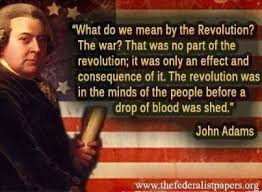
Before all of this physical rebellion, ideas were forming in men’s and women’s minds. Mighty and powerful thoughts were written and spoken. Debates took place in colonial houses of government where men were dared to think beyond the challenges. Some spoke their truths and dared to claim their sacred honors of God-given inalienable rights. Some spoke their truths and dared to swear to the Divine Right of their king. Some threw their fates to the winds and remained silent. There was a ghost of a chance that all could exist peacefully and respect each other’s opinions. “These are the times that try men’s souls,” penned Thomas Paine.

And so my seven fourth and fifth grandfathers pledged their souls and sacred honors to the Patriots’ cause for revolution…for ideals and freedom from a European king…for the foundation of a new nation. They were Joseph Story, Joseph Boultinghouse, Benjamin Dows, Conrad Rhodes, John Nickel, Ebenezer Newman, and Thomas Newman. If they felt that they stood a ghost of a chance, they kept that fear hidden underneath hearts of courage, bravery, and rightness.

This Friday, we celebrate Veterans’ Day. May we remember with pride our first American veterans of war.

52 Ancestors In 52 Weeks: Shadows

Hiding in the shadows was an air of mystery…a murder mystery. She had managed to keep it all to herself, that is, until she was exposed for the cold-hearted woman she was. Caught, put on trial, sentenced to prison.

Her secret lay hidden in marriage certificates, census records, and other resources. A chance Goggle of an ancestor’s name lead to a modern newspaper article from Washington County, Missouri: 1872 Murder Begins in County. Oh my my, Rebecca Eldridge Freeland Eads Leven Howard Boultinghouse…what have you done? And how are you related to my 2nd great uncle Frank?

Miss Becky, as she was called, led a life of living with different men and calling them “husband”. In actuality, she was widowed to a Mr. Eads. When living with Mr. Joe Howard, she helped raise Mr. Eads’s children. One morning in 1872, one of his boys had gathered the eggs from the henhouse. Becky claimed that there should be more eggs. The child related that the dog had eaten three. Accusing the six year boy of lying, she slammed an axe handle across his head. He fell dead. There were two witnesses to the crime. One was a daughter whom Becky took by mule 40 miles away and left her to die in the woods so she could tell no one what she had witnessed. The child survived and was taken in by a farmer. The other witness, Joe Howard, who was her supposed husband was a criminal in himself. Becky made him her partner in crime as he was a horse thief. Together, they fled the area.

Miss Becky fled to St. Louis in 1875. An attractive woman, she lured Frank Boltinghouse, a brakeman for the Missouri Pacific Railroad, into her web. They began living together, and she was with child. Meanwhile, Joe Howard was arrested in another part of the state for horse stealing. When he began to write letters to Mrs. Rebecca Boltinghouse, the police suspected that she was actually Becky Eads. The murder of the boy by Becky had been revealed to the police. Now, the police intended to track her down.

A police detective in St. Louis tracked Miss Becky to the address where Joe had been sending letters. Arrested, she was jailed. Her boyfriend Frank Boltinghouse came to visit her, and together they cried about her misdeeds. It was decided that they would marry at jail. She officially and legally became Mrs. Boltinghouse.

Both Becky and Joe Howard were taken to Jefferson County where the murder actually happened. She was charged with murder, and he was charged with helping her conceal the body. It took two trials and two verdicts to find her guilty…guilty of second degree murder with a prison sentence of 10 years. In 1881, she began to serve her term in Goodspeed Prison. When released from prison, not much is known about Miss Becky. She died in 1900. Perhaps, she took some secrets to the shadow of her grave.

As for Joe Howard, he was later hung for horse stealing by an angry mob in Pacific, Missouri.

My 2nd great uncle Frank Boltinghouse went on to marry a law abiding woman and have a daughter. He died in 1919.

All of this is a mystery just a Goggle away! Convoluted, puzzling…how could a woman be so cruel and conniving!?

52 Ancestors In 52 Weeks: Organized

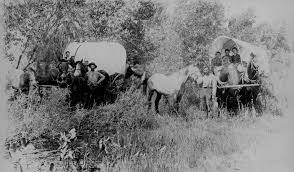
Organized…every ounce of our beings must be organized for this trip. From the train ride in Chicago, to crossing the Mississippi River, to boarding a covered wagon in Missouri…organized. I learned how to organize wagons through my experience of being a wagoner in the Civil War as I traveled with Generals Grant and Sherman to Vicksburg. Just six years ago.

In this year of 1871, our family is going to Kansas from our current home in DuPage County, Illinois. President Lincoln’s Homestead Act is calling us there for a claim of free land. My married son John and family along with daughter Mary and family are coming along. Three families will be organized with all it takes to make the journey.

We need oxen, barrels of dry goods and food, and water along with the wagon. Every crate and barrel has to be carefully weighed as the oxen can pull a limited amount along the trail. We can travel about 15 miles a day as the family will be walking beside the wagon to ease the load for the oxen. My wife of 27 years and mother of nine is carrying a child as we travel along so she can ride in the wagon along the way…Mary says the ride will be bumpy and unsteady…she will get jostled…she will walk part of the way.

There are about 30 other families traveling with us. At night, we will sit by the fire as we eat our evening meal. Some of them will share their stories of why they are going to Kansas for a new start. Like me, many of the men have served in the war and gained experience in going to new places. They are restless and need the dream of claiming lands.

Our first stop will be in Washington County, Kansas. There is a Pony Express Station there where we can refresh ourselves and, perhaps, restock some goods. From there it is about 100 miles to our final destination of Osborne County…about a week’s travel. I am worried for Mary as the due date for the baby will near.

May God grant us the resilience and courage to make this journey. We pray that being organized and ready to venture forth will be hallmarks of His Providence.

~Amos H. Boultinghouse 1871

Final note: Mary’s baby was born a few days after their arrival in Osborne County. Mary and baby Lafayette shared a tent for the birth. Amos and Mary lived in the county for about 25 years before their deaths. They are my 2nd great grandparents…Lafayette is my great grandfather.

52 Ancestors In 52 Weeks: Teams

Teams… of immigrants, of pilgrims, of pioneers, of peasants, of serfs, of freedom seekers offering their allegiance to a new world.

Teams... of immigrants to came through Plymouth, Castle Garden, Ellis Island, Boston arriving with little in their pockets but rich in dreams.

Teams...of soldiers, infantry men, militia, wagoners serving their county in times of trials and tribulations.

Teams…of farmers, of teachers, of housewrights, of carpenters, of laborers placing their trust in a new nation.

Teams…of farmers’ wives, mothers, caregivers, daughters dedicating themselves to families and ambitions.

Teams...of saints, sinners, crusaders, apostles aligning themselves to a merciful Father.

Teams... of risk takers, adventurers, first timers, go getters striking out to find themselves.

Teams…of DNA engineers and heredity gifters sharing blood and blood lines with me.

Note: I meant this as a poem. Using WordPress, I was not certain how to format this.

52 Ancestors In 52 Weeks: Fun Fact

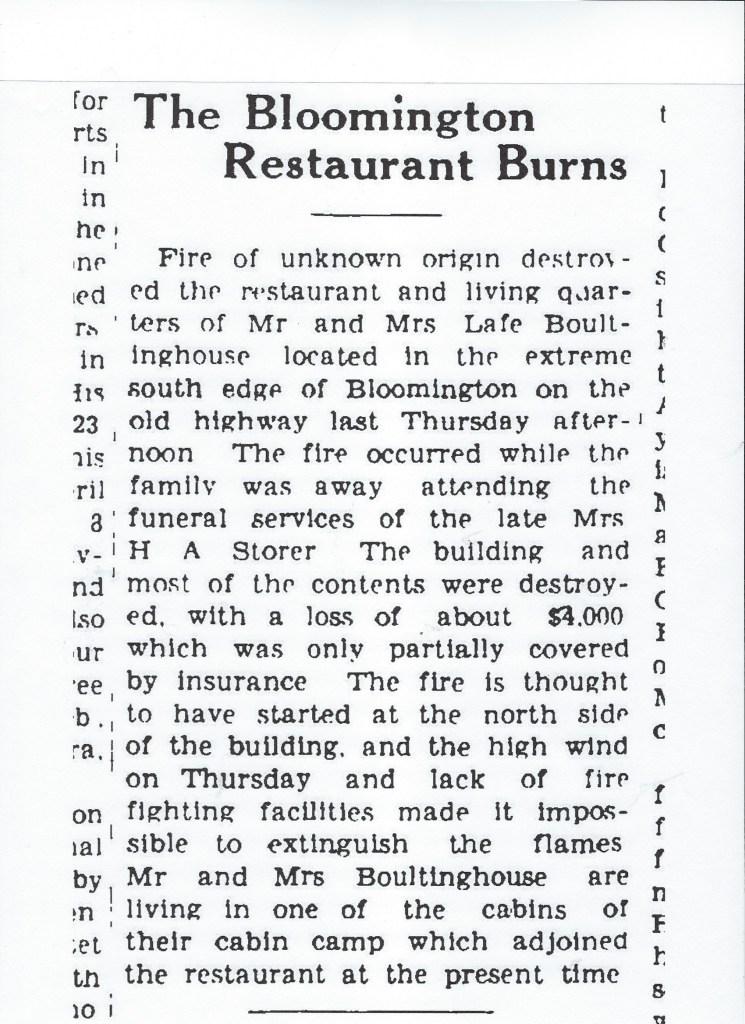
Fun fact: During the beginning of the Great Depression, my great uncle Jack took his family home to meet his parents for the first time. On a motorcycle with a sidecar, they traveled from Sheridan, Wyoming, to Bloomington, Kansas. Their dog accompanied them on the journey. It was a trip of 700+ miles on unpaved roads. Wife Zola and daughter Betty Lou met the in-laws and grandparents after a dusty, dirty journey. Can you imagine?

If Uncle Jack could be interviewed, here are some questions for him. What planning went into this trip? How did you plan what roads to take? When you stopped for the night, in what kind of places did you stay? What did you do when you ran into bad weather? What provisions were taken along? How did you convince Zola that this was an important trip to take? What unusual wildlife did you see along the way? How long were you on the road? How did it feel to be back in Kansas after all this time? What did Betty Lou enjoy the most about meeting her cousins and grandparents?

All in all, Uncle Jack lived quite a life. His jobs ranged from cowboy, roustabout on an oil field, hunter and fisherman, game preserve manager, Army wagoner during World War I, and designer for the Remington Arms company. He loved adventures and challenges. He never put down roots. He never had a permanent home. I wish I could have met him to get his real story…not just a fun fact.

52 Ancestors In 52 Weeks: Identity

What made them who they were? How did they see themselves? Were they complex personalities or simple folk?

He was a victim of religious persecution. He was an indentured servant. He dared to come with the family that held his contract. The voyage was long, and the ship on which he traveled was blown off course. He and his fellow passengers were not headed to the Virginia colony as planned. Instead, they landed offshore in Massachusetts. No form of civilization awaited them. They would begin anew. His identity…George Soule, one of the Pilgrims on the Mayflower.

He was born in Massachusetts but had moved on to New Hampshire. His country was in crisis, and his ideas and beliefs would be considered treason to the Crown. Would he stand with his fellow patriots and sign an association test to proclaim his allegiance to a new idea of government? His identity…Joseph Story, patriot during the American Revolution.

He had previously enlisted in the U.S. Army at the age of nineteen. He had served his country as he came from a family that willingly gave of that service. Then, his country needed him again at the age of 43. His country was divided by Civil War. His president asked for volunteers. He had a farm and a family that would be left behind. He had a talent for caring for horses as horses were paramount to the battles. His identity…Amos Howell Boultinghouse, 55th Illinois Infantry.

She was an orphan from a small Polish village. Her brother had immigrated to America. He invited her to join him. Could she travel to Italy to board a vessel headed to New York? With three other girls from her village, she made the weekslong trip. She had very little that she carried in her knapsack. She had $9 in her possession. She knew no English. She was an unskilled worker. Her brother met her at Ellis Island to escort her to Connecticut and a position as a domestic in strangers’ home. Her identity…Anna Mroz, a new American.

None of these left behind letters or diaries so future generations could discover their inner thoughts. They were simply souls longing to create new lives with new ideals. Their identity…they left legacies for their people.

52 Ancestors In 52 Weeks: Popular Name

His mama had grown up with a fascination for the author’s stories. They were tales taken from German and Dutch legends. This writer had written in a different tone than others. He wove tales to entertain and delight…to evoke a sense of wonder. Both his mama and the author were born in New York.

This child named after her favorite author was born in Woodbury County, Iowa, far from New York. He was the fourth son of this farming family. The family would move on to finally settle in Osborne County, Kansas. The young man would work from sunup to sundown to help his family in the fields, barnyards, and pastures. Perhaps, at night his mama read the short stories the author wrote. Or maybe, she retold them by heart before he fell asleep.

The young man was never called by his full name by family and friends, let alone by his full first name. He shortened his name to Wash. If he signed a document, he signed W. I. Storer. When his friends were told his full name, they probably replied, “We didn’t know that.”

My great grandfather was named Washington Irving Storer after the author of such tales as The Legend of Sleepy Hollow and Rip Van Winkle. Wonder if after a hard day’s work as a farmer, he wished he could nap under a shady tree for 20 years.

52 Ancestors In 52 Weeks: Mistakes

Numerous times I have come across mistakes on death certificates. I always looked at the informant’s name and thought he/she had misinformed the funeral director. Not so anymore…first hand experience taught me differently.

My father-in-law died in October, 2018. When my husband brought home a copy of the death certificate, I read it. Four mistakes! One was his middle name. Another was the address of his residence…transposed number. Another was the name of the assisted living facility…left out a letter in the spelling. The last was the information about the duration of the illness. I had gone with my husband to the funeral home to make arrangements, and I did not remember the funeral director asking my husband about the information per se. I asked about correcting the mistakes and learned they cannot be corrected once submitted. It appeared that the funeral home secretary did not proofread the information before submitting it. To top it off, the memorial programs given at the visitation listed his year of death as the next year!

In September, 2021, my husband Daniel passed away. Going to the funeral home I asked about the death certificate. The director related that the information placed on it of a non-medical nature was taken from the files of the parents’ funeral and records. I would be listed as the informant. I related to her that I wanted to see a dummy copy of the certificate before it was submitted. I told her I was a genealogist and accuracy was important to me. It would be e-mailed to me so I could have the final approval. When the e-mail came, I read the dummy copy in disbelief! My name was misspelled! I sent it off with an immediate correction. Correction made.

How many other certificates are filed where the staff have not proofread the information?

52 Ancestors In 52 Weeks: Conflict

Captain Daniel Boultinghouse’s eyes scanned the horizon for any movement. The prairie grass was tall, and sometimes obscured his view. He was cautious. He had met this enemy before.

It was September, 1814. America was at war with Britain and with their allies. He and his company had been called up by the executive order of Governor Edwards. They were to protect the settlers from Indian raiders. Daniel had another conflict with this issue: his son Joseph had been murdered by the Indians a year earlier.

Born in Pennsylvania, Daniel had moved across the territories of the Scioto River Valley (Ohio), across Indiana, and finally into the Illinois territory. In Edwards County, he could set up farming and making a home for his large family. Having livestock in the vast pasture land was part of his homestead. He placed his son Joseph in charge of the herd. Later, Indians killed him and mutilated his body which his father found after his dog came home without the son. Such conflict ravished his heart and soul…avenge the death or peacefully run off the natives. The decision would be made by executive order of the Governor to form a military company. So, Daniel and his company patrolled the prairies until December of 1814. They kept settlers safe. The War was over.

Three years later in 1817, Daniel came across a band of natives and spied his son’s horse among the others. Would he exact his revenge, or be a man of peace? His decision and actions left no native witnesses. The conflict was finally over.

References

Ferguson, Gilliam. Illinois in the War of 1812. Champaign, Illinois: University of Illinois Press, 2012.

History of White County, Illinois; page 453, Daniel Boultinghouse