52 Ancestors In 52 Weeks: Worship

If faith in the Lord could be delineated on a family tree, there it would appear. A seed of faith as small as a mustard seed would grow into a sturdy branch. In 1866, John Francis Nickel and his family of Williams County, Ohio, would worship the Lord in the Methodist faith.

As John traveled his life, he carried that faith to Osborne County, Kansas. He was a widower who settled his three sons and their families there. All remained parishioners in the Alton Methodist Church. They served on committees that provided for the needs of others. Praying, reading Scripture, they became God-fearing members of the community. John, my third great grandfather, passed the faith onto this son James.

James, my second great grandfather, passed the faith onto his daughter Sarah Almina. Sarah, my great grandmother, and her husband passed this gift onto their son Andrew Earl Storer. Andrew and his wife placed this faith into the hands of their daughter Merna Mae Storer. (Andrew is my grandfather and Merna my mother.)

And in time, I would receive the gift of faith from my parents. I would not follow the Methodist faith. I would be led in a different direction by my father’s people…I would be Catholic. As I embrace my faith, I share with my ancestors the same beliefs in God and the Trinity. Amen.

Alton United Methodist Church where my ancestors worshiped

52 Ancestors In 52 Weeks: Technology

April 15, 1872 Osborne County, Kansas

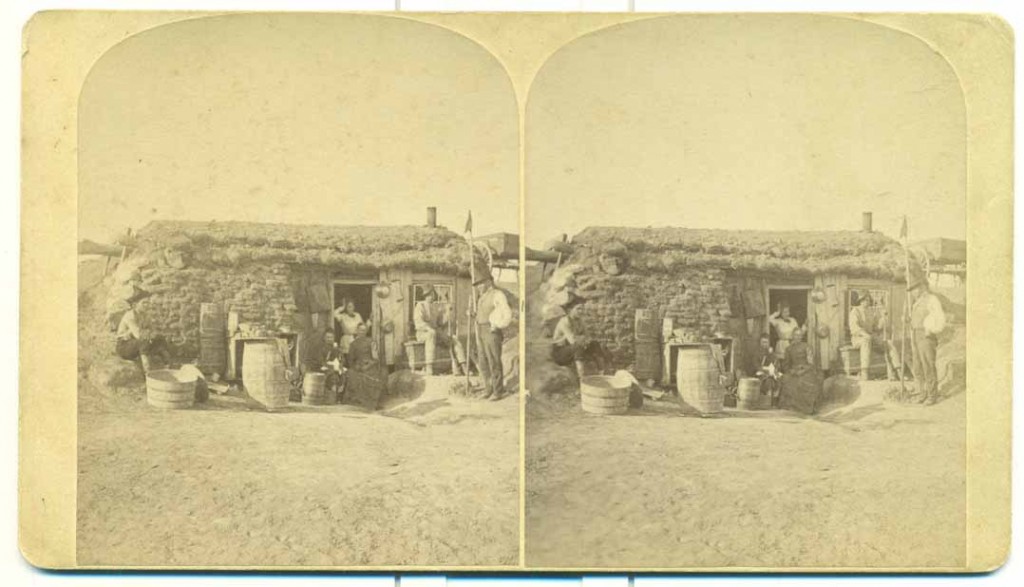
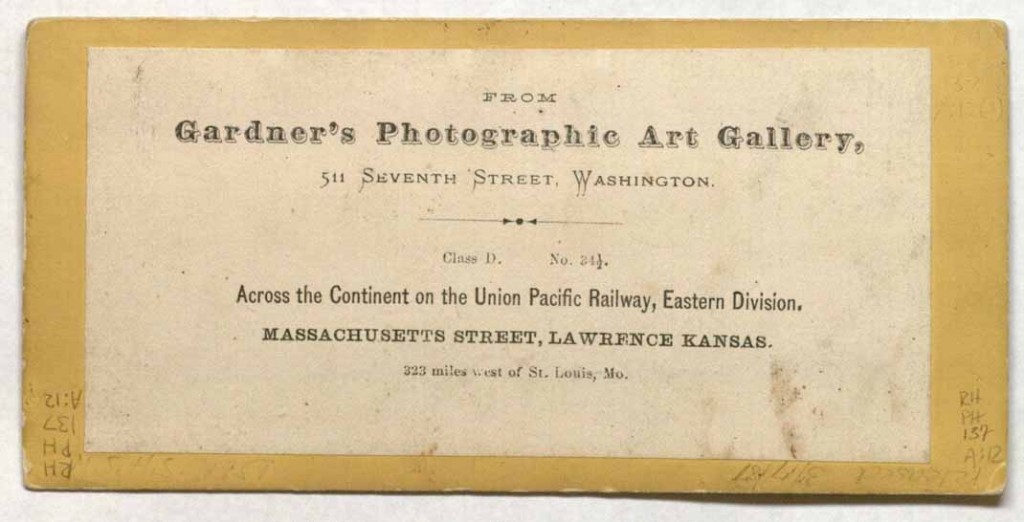
Heard tell that he came here five years ago. Can you imagine…the man who once made likenesses of President Lincoln was here in Kansas? They said he even took likenesses of the aftermath of battles in the War of the Rebellion. He came west by wagon with that magical box of his. They say the Kansas Pacific Railroad hired him to show the progress of the railroad being built across here. Can you imagine?

Heard tell that man made likenesses of settlers making dugouts on their homestead land. He wanted to capture the feel of families building their first homes on the prairies where trees, and thus lumber, were at a premium. He aimed to show how homesteaders would scrabble onto the sod to fashion shelters. Can you imagine?

Heard tell that man left his magic box behind. He went back East to live in Washington, D.C., where he once began his work. Yep, he gave up making instant portraits. Heard tell he started an insurance agency. Said his name is Alexander Gardner. Can you imagine?

~ Signed… Mary Etta Soule Storer Osborne County, Kansas

Note: This is an imaged telling of Mary Etta’s account of Gardner coming to Kansas. She is my second great grandmother.

52 Ancestors In 52 Weeks: Achievement

In thinking out loud about this prompt word and it being Women’s History Month, who in my family tree can step up to the plate and call out my name to get my attention? Which of my female ancestors…who is this week’s winner?

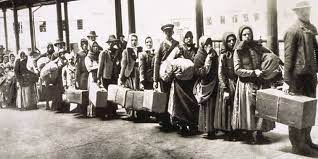
If one measures achievement in overcoming obstacles, then my paternal grandmother Anna Mroz wins the spotlight. Orphaned, 14 years old, she buys a ticket to come from Poland to New York through Ellis Island. Her ship leaves from Trieste, Italy, which is over 700 miles away. It is 1906, and part of the journey will be by foot while carrying her possessions in a sack. Her achievement: she is the first person in my family to see the Statue of Liberty.

If one measures achievement in overcoming financial struggles during the Great Depression and the Dust Bowl, then my grandmother Isabella Mary Boultinghouse wins the medal. Married at 19 in 1922, she manages to feed and clothe her two girls and husband. She knows how to sew, crochet, and embroider. She earns extra money by selling baby sets (booties and bonnets) to department stores. Her achievement: she is a role model in my family for women learning to be independent.

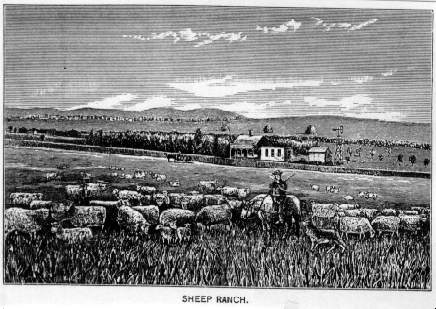
If one measures achievement in honoring one’s husband’s dreams, then my 2nd great grandmother Mary Etta Soule takes first place. Born in New York and traveling down the Erie Canal, Mary makes it to Minnesota to claim land and create a home with her widowed mother and brothers. There, she marries and goes with husband Andrew to live in Wisconsin, Minnesota, Iowa, and finally Kansas. Her achievement: she helps start a family farm and family tree branches in pioneer country…a sheep farm unique to the area.

Finally, if one measures achievement in being a silent majority in the Women’s Liberation Movement, then the kudos go to my mother Merna Mae Storer. Born in Kansas and swearing to get off the farm, she is 18 years old when she goes to work at the State Capitol building in Topeka. Meeting a soldier sweetheart at a dance, she moves to the suburbs of Washington, D. C., after the war to marry and have her family. Because of her husband’s government job and absences from the home, she raises three children. In her later years, she will start a craft business…paint, sell, manage the bookwork, schedule appointments and shows. She becomes a success in her newly adopted hometown in Pennsylvania. Her achievement: becoming and being her own woman.

User comments

What is the measure of achievement? Look at, exam, reflect on, emulate the women in our family trees as we discover them among the leaves and branches.

52 Ancestors In 52 Weeks: Language

He was a simple farm boy, but he spoke the language. He became fluent at a young age. The language would bear with him through childhood, during young adulthood, and into his middle aged years.

During childhood, he learned the language while working outside in nature. He used it daily on his father’s farm. He shared the melodic sound of it with his older brother and twin sister. But it was especially reserved for those creatures he loved most dearly.

In his young adulthood, he was called away from the farm. He was drafted to be a language expert in the U.S. Army during World War I. He was to train new recruits to learn the language and care for those placed in their charge. He passed on his secret language and gestures.

Once home, he married and raised two daughters. Now, a second generation would learn the language. He could pass on his love. On the farm, he would speak his love language as he rode out to far pastures to check on cattle herds. He would entrust his beloved daughters to ride out each day and attend a one room schoolhouse.

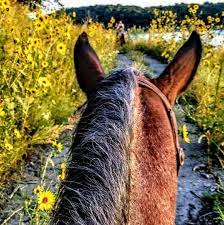
It was my grandfather, Andrew Earl Storer, who spoke the language starting in boyhood. On an Osborne County, Kansas farm, his language of horses was a lifetime love. He was fluent in the language. He passed it on to my mother, Merna Mae Storer. So beautiful, so memorable, so heartwarming…my Gramps and horses.